Tamunotonye was born preterm. Doctors told his mother he might not survive past the fourth day. She had endured a long labour and had been bleeding heavily. His father, a Christian missionary, was away at a crusade in a village in Bayelsa, a riverside state in southern Nigeria. There was no network to reach him.
“My mother said she named me Tamunotonye, which means ‘Gift from God’ in Ibani, because no one believed I would still be here,” he said in an interview with TechCabal over the weekend.
Tamunotonye turned 16 last December. He lives in Borokiri, a fishing town on Nigeria’s oil-rich Bonny Island in Rivers State. His childhood, he noted, has been hard.

“I learnt early that no one was coming to save me, so I was determined to make something out of my life,” he said, his voice deep, almost hurried.
When he was eight, he went into the muddy bushes of his village with other children to pick periwinkles. Others wore rain boots, but he went in barefoot and sustained a deep cut that has left a scar to this day.
He would go in with an empty yellow custard bucket, fill it with periwinkles, and walk to the edge of the bush where large sacks were kept. He made several trips until one sack was full. He would then carry it to a wooden canoe stationed by the shore, empty the contents, pick up another sack, and start again.
“At that age, I could fill three big sacks. People used to wonder how I managed,” he recalled with a brief laugh.
Back home, his mother would cook the periwinkles. Together, they removed the shells before sending them to Bonny Main Market or Cool Beach to be sold to wholesalers.

“I would not say it was lucrative, but it puts food on the table because Dad does not bring in much income. He does not earn a salary. He lives off donations and an irregular stipend from his mission,” he added.
Tamunotonye’s mother, Evelyn, ran a small kiosk. She had been apprenticed to a weaver but never completed her training.
“I used to be a weaver. You see those big wrappers worn for traditional weddings in riverside communities in Delta, Rivers, Bayelsa, even Akwa Ibom and parts of the South-East? I was learning how to make them. I enrolled to learn from my stepmother’s younger sister, but I couldn’t finish. It’s a long and painful story,” she recounted to TechCabal over the telephone on Sunday afternoon.
“I don’t know what I would have done if not for this son of mine. He can be stubborn sometimes, but I see that he wants to make something out of his life, and all I do is support him so he can have the life I could not give myself.”
Her family has always struggled to survive. Tamunotonye’s older siblings are distant. His elder brother is not with them.
When asked about his whereabouts, Tamunotonye said, “I don’t know where he is. Some say he is in Lagos. Some say Abuja. But I know he is working, and he sends some money home from time to time. The load on him, I must admit, is too much.”
He has an elder sister who, he said, is unwell. He is the youngest.

The long, long road
“Going through school was a struggle,” he noted. “My mother and I did whatever it took to make things work, but it was hard. It has been hard.”
He attended a private primary school in the main town. A member from one of the branches of a church his father pastored paid his tuition for a while. When that support stopped because the benefactor moved away, he stayed home for almost a year. He was in Primary Four when he paused his schooling.
He later joined his peers to sit the Primary Six Common Entrance Examination and obtained his First School Leaving Certificate.
Throughout his primary education, he never saw a laptop up close, much less used one.
“The closest I have been to a laptop was when my elder brother returned for a family funeral in 2022 or 2023. I tried to search his bag for his perfume, and he caught me. I saw his laptop and moved it around as I searched. That’s it.”
This year, he registered for the Unified Tertiary Matriculation Examination (UTME), the primary gateway to higher education in Nigeria. It is a computer-based test. It has been so since 2015.
Organised annually by the Joint Admissions and Matriculation Board (JAMB), Nigeria’s admissions body, the exam assesses the eligibility of senior secondary school graduates for admission into universities, polytechnics and colleges of education in the country. For the 2026 UTME, the entire process, from registration to examination, has been shaped by technological, administrative and integrity concerns, reflecting both progress and persistent challenges.
Officially, the 2026 UTME registration commenced on January 26, 2026, at all accredited Computer-Based Test (CBT) centres nationwide.
The exercise ended on February 28, 2026. This was after JAMB gave candidates over one month to complete all steps, including biometric capture, document uploads and subject selection.
Before registration, candidates must obtain a JAMB ePIN, which serves as the application voucher. The sale of ePINs for the UTME ran from January 19 to February 26, 2026.
JAMB maintained a strict cashless registration system, requiring candidates to pay electronically through accredited channels. There were three main price categories for ePINs: UTME registration without the mock examination, UTME with mock examination, and Direct Entry for candidates with prior qualifications.
The board also noted that registration could only take place at accredited CBT centres authorised by JAMB. Candidates were warned against unapproved agents or centres, which often create confusion and increase the risk of irregularities.
‘Why I want to sit UTME this year’
Tamunotonye left secondary school in June 2024, but university was not an option.
“My mother said she could not afford to send me,” he explained. Despite the setback, he was determined to continue his education. He dreams of becoming a teacher.
“I feel we need more good teachers who truly care about their pupils,” he said. His elder brother had suggested law. He likes the idea, but his heart is elsewhere. “I truly want to be a teacher or a pastor like my father. He is a good man,” he added.
When he could not sit the UTME in 2025 like his peers, he returned to his community to assist teachers at a government secondary school. He marked scripts, wrote lesson notes and sometimes took the register. It was a temporary, unofficial role, but it allowed him to earn ₦10,000 ($7) monthly.
Soon, he began offering private lessons to students preparing for the Common Entrance Examination and the West African Senior School Certificate Examination. Through this work, he saved money and, with additional support from his family, registered for the UTME this year.
“It was scary because I didn’t tell my family that the money I was asking for was for the UTME. I just wanted to try my luck, because I know that even if I get admitted, I may not have the money to see it through,” he said. His eldest brother advised him to wait another year so the family could better prepare, but Tamunotonye is restless.
“This place is a village. To get to my community from the main town, I have to use a local boat. I am just tired of this place,” he said, his voice cracking with longing.
His ambitions are clear: he wants to study in Port Harcourt or Abuja.
“If I pass, I could gain admission into Rivers State University, Ignatius Ajuru University of Education or the University of Port Harcourt.”
“I just want to go to school. But if I fail the UTME, that dream will only be a pipe dream. And I want to make something out of my life.”
Of those who do finish secondary, only about 10 to 12% go on to enroll in tertiary institutions.
That leaves roughly 30 to 45 young people who finish secondary school but never proceed to tertiary education either because of cost, limited space, or other barriers.
No personal email, no smartphone
The registration process, Tamunotonye recounts, was intimidating. He used his elder brother’s email because he does not have one of his own.
“I tried to open one of my own, but the process was too confusing. I don’t even have a SIM card of my own, and I did not have the time to go through all those steps, so my brother’s email was the best option,” he explained.
He also said he does not have a phone of his own.
“I got an old Android from my brother after I left secondary school. It has some screen and battery issues, but I manage. Recently, he asked me to return it because the one he is currently using is bad,” he said.
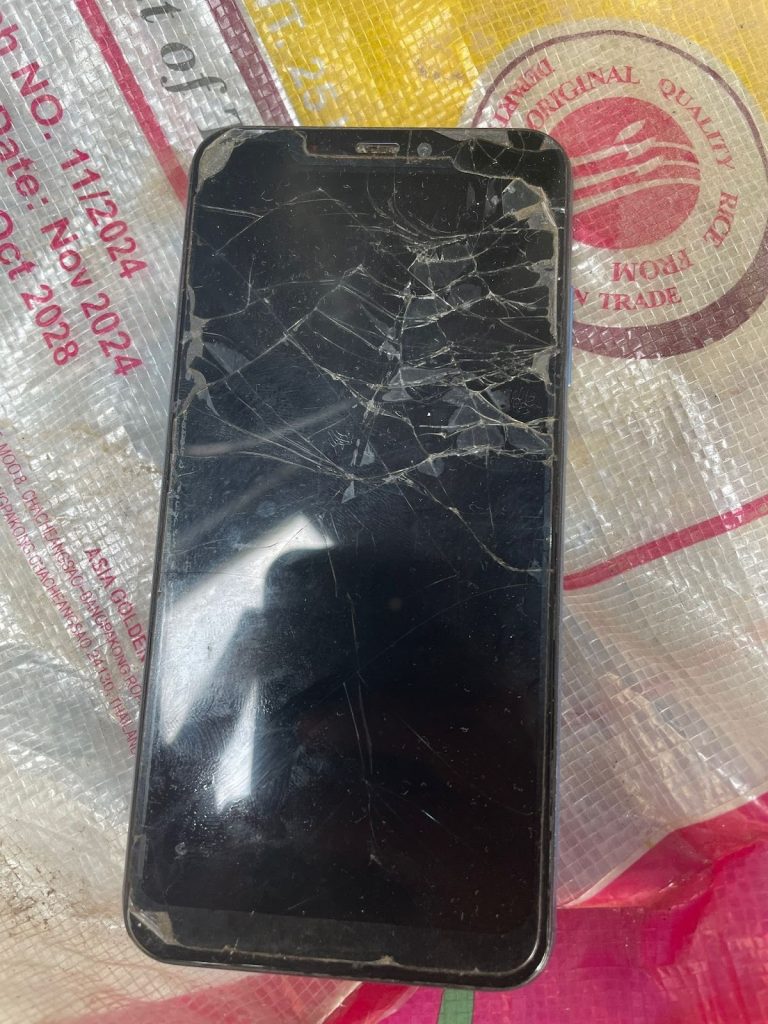
He joined a WhatsApp group on that phone to learn. He watches YouTube videos to prepare for the UTME. Still, fear looms.
“I feel ashamed to say it, but when I was at the cybercafé, I wondered how these things, these computer systems worked. I wished I owned a laptop, even just to practise until the exam is over,” he said.
He has never used a desktop computer. He wanted to enrol in a computer school, but fees and transport costs were prohibitive.
“My friend from church said I could watch YouTube videos, but it’s not the same,” he noted, sighing intermittently. “I have no idea how to use a mouse. I have learnt that I have to for the examination. This whole thing scares me, but I cannot ask anyone to buy me a laptop. Who would want to do that at this point? Where would I find the money?”
Fight or flight?
Tamunotonye’s life is a negotiation between ambition and circumstance — each day split between survival and preparation for a future he must wrestle into being.
He tutors, runs errands and helps his mother at the kiosk. Nights are for study. Every spare moment is spent imagining life beyond Bonny Island.
“My mother has struggled to put food on the table. I have to fight not just for myself but for her too,” he says.
The UTME is a gateway. Failure means delay; success, a step toward freedom and independence.
In his village, opportunity is scarce. Getting to school is a long, dangerous ordeal: from the main town, he boards a local boat home.
The exam is unforgiving; mistakes on the keyboard cost marks. He has weeks to prepare, but few tools. A laptop is a luxury.
Still, Tamunotonye finds ways to bridge the gap. He observes, memorises and practises in fragments. He leans on imagination as a tool.
“I watch YouTube videos. I see how people type. I even talk to myself, pretending I am taking the test,” he says. “It is not perfect. It is not enough. But that is all I have.”
Tamunotonye has never taken a computer-based test before, not even a practice one.
“I learnt there is a mock exam, but I didn’t pay for it,” he says. “I am trying to manage the money I have in case JAMB sends me to a distant location. There is only one centre I know in Bonny, the Federal Polytechnic of Oil and Gas.
“I heard there is another, but I am not sure. If they send me to Port Harcourt, I will need at least ₦50,000 ($37.04) — just to get there, pay for accommodation and return home.”
JAMB assigns candidates to accredited CBT centres based on available space and their chosen exam towns, notifying them when they print their slips, though some have been posted to distant locations.
He does not have reliable access to a computer or a CBT centre where he can practise. A former classmate offered to let him practise on his father's desktop computer. That, for now, is his only hope.
“But I am scared I might fail,” he admits.
His worry is not just about unfamiliar hardware; it is the entire format: time management, navigating questions, and submitting answers. Everything is digital.
“I have not written a CBT exam before. My West African Senior School Certificate Examination was pen and paper. I couldn’t even open a simple email address for myself,” he says in a mocking tone.
“That’s how bad it is. The SIM card I am using was registered by my mother. All I really know about using computers or digital systems is my phone, and that knowledge ends at my browser and social media, especially YouTube.”
Support, preparation, resources
In response to the digital reality many candidates face, particularly those with limited computer exposure, several online platforms and edtech services have expanded their support for UTME preparation.
Myschool and other digital education providers have launched online tutorials and revision materials, including mock tests and subject walkthroughs, to help candidates familiarise themselves with the CBT format.
Candidates are also encouraged to take advantage of official JAMB materials, such as the recommended reading text, The Lekki Headmaster by Kabir Alabi Garba, which forms part of the English examination component, and to consult the board’s official registration guidelines.
Despite these updates, the shift to a fully computer-based process continues to expose structural challenges within Nigeria’s education system. The gap highlights deeper questions about digital literacy, access to technology and equitable preparation opportunities for all candidates.
JAMB has taken steps to streamline procedures, enforce compliance and improve the credibility of its processes. However, the board’s ability to ensure fair access to preparation resources remains tied to broader issues of educational infrastructure, digital penetration and equity within Nigeria’s schooling system.
Nigeria’s digital divide
As Nigeria’s education system gradually transitions towards technology-dependent assessments, such as the CBT format used for examinations like the 2026 UTME, a stark digital divide has emerged.
Millions of young Nigerians sit crucial tests that require computer skills they have never had the opportunity to acquire. The digital divide is not accidental; it is rooted in limited access to digital devices, infrastructure and connectivity for a significant share of the population.
Despite the growing importance of digital literacy, fewer than one in five households in Nigeria owns a computer.
According to a World Bank-supported report, only about 9.4% of households nationwide own a computer. In urban areas, the figure rises to around 16%, but in rural communities it falls to as low as 3%. In many remote or underserved areas, students have no access to laptops or desktop computers at home for learning or test preparation.
This lack of access compounds educational inequalities. A student growing up in a rural town or peri-urban settlement may never have had the chance to practise with a keyboard, navigate a web browser or complete assignments digitally — skills that are now assumed in many examinations and academic programmes.
Why digital devices matter more than ever
Computers and laptops are more than examination tools; they are gateways to information, learning platforms and employment opportunities.
However, when so few Nigerian households have access to these tools, large segments of the population are left behind in an increasingly digital world. Reports indicate that only about 34.6%of households have internet access at home, a figure that includes smartphone use but also highlights how limited fixed broadband or Wi-Fi penetration remains.
For learners in rural areas, the situation is much more difficult. Many schools lack not only internet connectivity but also basic computer laboratories.
A report by The Guardian (Nigeria) describes classrooms in some communities without electricity or Internet access, underscoring the gap between digital inclusion goals and reality on the ground.
Internet penetration is growing. But, how even?
Nigeria’s internet footprint is expanding rapidly. As of early 2025, there were an estimated 142 million internet subscribers, with broadband penetration rates nearing 48%. This marks a significant improvement over the last decade and demonstrates growing demand for digital services in education, commerce and entertainment.
Yet these national averages conceal wide disparities. In rural areas, infrastructure challenges—such as unreliable electricity and limited network coverage—mean that even if a family owns a laptop or smartphone, it may be difficult to use it effectively for learning or examinations.
The cost barrier
Economic barriers deepen the digital divide. In Nigeria’s consumer electronics market, brand-new entry-level laptops typically start at around ₦350,000 ($259.26), while higher-performance models frequently cost more than ₦1 million ($7,407.41).
These price points place laptops beyond the reach of many families, particularly outside the major cities.
Even used or refurbished laptops, which could offer a more affordable alternative, often cost over ₦100,000 ($74.07) in many markets.
For households with modest monthly incomes and high living costs, investing in a personal computer represents a significant financial burden. Consequently, many young people preparing for computer-based tests have never actually used a laptop before.
School infrastructure and the urban-rural divide
While some private and well-funded schools in urban centres boast computer laboratories and digital learning spaces, many public schools, particularly in rural areas like Tamunotonye’s, do not. Reliable national statistics on the number of schools without computers are lacking, but longstanding accounts from educators and digital inclusion advocates consistently emphasise that school computer infrastructure remains sparse and uneven.
Efforts to introduce computer education have been hampered by poor maintenance, a shortage of trained teachers, and an inconsistent electricity supply. Many schools that were once equipped with a few desktop computers have seen them rendered unusable due to neglect.
Mobile phone ownership in Nigeria is relatively high compared with computer ownership, with the majority of households having at least one device. However, while useful for communication and Internet access, smartphones cannot effectively replace laptops in contexts that require typing, software use, or extended reading.
The difference becomes particularly stark when students face computer-based examinations requiring proficiency beyond simple screen tapping.
Consequences run deep
The implications of limited laptop access are clear: students without prior experience with digital devices enter examinations such as the UTME at a significant disadvantage. They must navigate not only academic content but also the mechanics of using a computer under exam conditions. This barrier disproportionately affects young people from rural communities and low-income families.
For policymakers and educators, the challenge is considerable. Increasing laptop penetration, improving school infrastructure, and ensuring reliable internet connectivity are essential steps to bridge the digital divide.
Gbenga Sesan, Executive Director of Paradigm Initiative, a digital rights and inclusion practice in Africa, has called for increased investment in digital literacy programmes, especially for underserved communities, to ensure people can use digital services effectively.
He also emphasised that digital literacy and inclusion reduce the digital divide and equip people with the skills needed to thrive in a digital economy.
Paradigm Initiative’s research stresses that investment in digital skills must go hand in hand with device access and connectivity if students are to benefit from a fully computer-based exam system.
Without these measures, he stressed, Nigeria risks perpetuating inequality at a time when digital skills are critical for academic success and future employment.
Comments
Post a Comment