
Happy pre-TGIF. 
If your week has been missing a little spark, it is probably because you have not seen Episode 11 of Headlines by TechCabal, our talk show where we break down the biggest stories shaping tech and business across Africa in a simple, direct way. Published on Saturday, the latest episode continues that run. Partners interested in sponsoring future episodes can reach the team and fill out the form here.
Let’s dive in.

streaming
MultiChoice offers $6 DStv Stream deal as Showmax shutdown looms

MultiChoice, the African pay-TV giant, is offering Showmax subscribers a heavily discounted entry point into DStv Stream Compact as it prepares to shut down Showmax on April 30. The R99 ($6) monthly offer, down from the standard R299 ($18), comes with a 12-month commitment and is positioned as a bridge for users who would otherwise lose access to Showmax content.
The move follows months of structural changes at MultiChoice after the company, now owned by Canal+, confirmed the gradual wind-down of Showmax and the migration of its catalogue to DStv Stream. Earlier reports showed the group shifting key originals and live programming onto DStv Stream, while restructuring its streaming strategy around a single platform tied to its pay-TV ecosystem.
Unlike a seamless migration, the transition requires users to actively sign up for DStv Stream, create new profiles, and follow manual onboarding steps. This creates a risk of churn at scale, particularly among users who originally joined Showmax as a standalone streaming product rather than as part of a pay-TV bundle.
State of play: The new pricing appears designed to reduce that risk by lowering the entry barrier. At R99 ($6), the offer undercuts rival streaming services in South Africa while retaining access to live sports through SuperSport, one of MultiChoice’s strongest assets. However, the pricing is time-limited. After 12 months, subscribers revert to the full R299 ($18) rate, introducing a significant jump that could later trigger another wave of cancellations.
MultiChoice has not disclosed the size of Showmax’s active user base, making it difficult to measure how many subscribers are affected by the shutdown. Customers who choose not to migrate can request refunds for unused subscription periods, while automatic payments will stop once the platform is discontinued.


Fincra is now licenced in Canada.
Fincra has secured a PSP licence in Canada, adding a regulated connection between Africa and one of the world’s most trusted financial systems. See what this means for your business.
policy
CBN’s new directive is giving Nigeria’s financial system a double-layer audit

The Central Bank of Nigeria’s (CBN) recent circulars show that the regulator is stepping deeper into cryptocurrencies through a pilot with virtual asset service providers (VASPs) and asking banks and fintechs to audit their own cyber defences before regulators do it for them.
On March 31, the regulator launched an anti-money laundering, counter-financing of terrorism, and counter-proliferation financing (AML/CFT/CPF) supervision pilot to understand how virtual asset businesses operate, including business risks, how they onboard users, monitor transactions, and move money. The CBN named fintechs and crypto-related operators, including cNGN, Flutterwave, KuCoin, and Paystack, as the first set of companies it plans to engage as it moves closer to overseeing virtual assets and their use in payments and remittances.
Financial institutions have to take a test: The regulator also launched a cybersecurity self-assessment tool (CSAT) for financial institutions, which will assess how prepared they are for cyber threats. The regulator expects firms to identify and address their own weaknesses. The CSAT assesses areas such as governance, risk management, incident response, and third-party exposure, and carries sanctions if false information is submitted.
Why all this scrutiny? The country’s financial ecosystem is growing fast, and the CBN is doing all it can to put the growth under its control. In 2024, Nigeria’s financial sector averaged 4,718 weekly cyber attacks. A year later, the problem remained persistent as fraud losses jumped by 603% year-on-year in Q1 2025.
While Nigeria exited the Financial Action Task Force (FATF) grey list in October 2025, regulators are pushing security and oversight reforms aimed at strengthening control over payment flows and monetary regulation. Nigeria is scheduled for another Mutual Evaluation Report (MER) in 2027, and adequate preparation, including closing gaps in transaction visibility and anti-money laundering compliance, will be key to avoiding a return to the grey list. The CBN is working to ensure that outcome.
policy
Ghanaians can now use their IDs to make payments
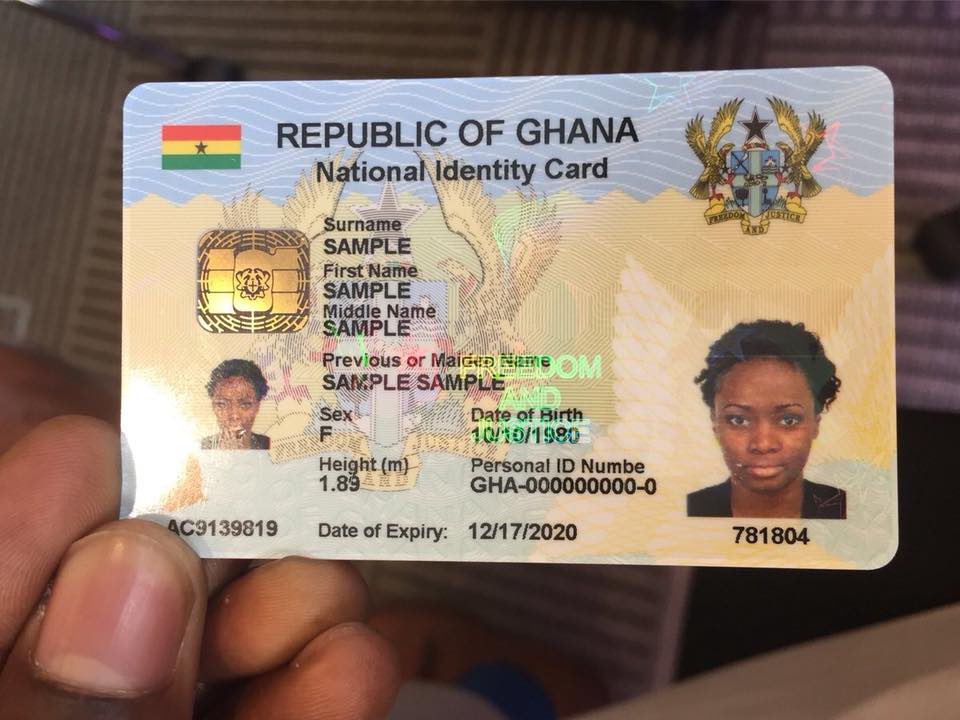
In a first, Ghanaians can now verify their identity, register SIM cards, and move money using the same card, as the country moves toward managing registration services through a single central hub.
On April 1, the National Identification Authority (NIA), the country’s national identity authority, announced the addition of a digital wallet to the Ghana Card, the country’s sole official ID for financial transactions since 2022.
What this e-wallet unlocks: The payments feature enables users to withdraw cash from automated teller machines (ATMs), pay in stores and online, send money internationally, and access insurance and emergency support. Existing Ghana Card holders can activate this feature through the MyCitizens app, a personalised app where citizens can access government services, or by dialling *402#.
The 3-in-1 agenda: The Ghana Card was always designed to do three things, according to the NIA:
- e-ID: The core identity function used for SIM registration and access to public services
- e-passport: Activated in 2022 to enable travel identification using the card
- e-wallet: The newly launched feature enabling digital payments through the card
How does the money part work? No single bank is in charge of the e-wallet, according to the NIA. Instead, the wallet acts as a shared layer that financial institutions can plug into. This likely means that if someone has multiple bank accounts linked to their identity, the system could allow them to connect those accounts and choose how transactions are routed.
Why this matters: Ghana’s credit card penetration was forecast at 0.6% in 2024. By embedding a wallet into a nationally issued ID, Ghana is aiming to raise that number, which is projected to remain low through 2029. If this works, the move could improve access to finances while testing a model where identity forms the basis of payments.
tax
South Africa’s tax authority wants to give every taxpayer a digital identity
South Africa’s tax authority is moving to issue every taxpayer with a unique digital identity under a major overhaul that blends biometrics, artificial intelligence, and instant payments into a single compliance system.
The South African Revenue Service (SARS) has launched “Modernisation 3.0,” a programme that will consolidate taxpayer records into one authenticated profile secured by biometric and two-factor verification (2FA). The system is designed to give individuals and representatives a single view of their tax affairs, allowing them to update details, check accounts, and make payments without interacting directly with the agency.
The shift comes as SARS reported a record R2.01 trillion ($119.2 billion) in net revenue for the 2025/26 financial year, its first time crossing the R2 trillion ($119 billion) mark. The figure reflects strong growth in collections and signals the scale of the tax base the agency is now seeking to manage through automation.
Modernisation 3.0 also expands SARS’s use of artificial intelligence. The agency plans to deploy systems it describes as “agentic AI” to automate routine compliance work, analyse large datasets, and flag risks for investigation. These tools will also support a broader push toward voluntary compliance by reducing manual processes.
A key component of the overhaul is a new instant payment system being developed with the South African Reserve Bank (SARB), the country’s central bank. The system aims to speed up tax payments and reduce reliance on cash-based transactions, aligning with broader efforts to digitise the country’s payments infrastructure.
SARS said the programme will also extend to value-added tax (VAT) assessments and customs processes, including a move toward automated VAT returns and a “no-stop border post” model for trade flows.
Edward Kieswetter, the agency’s commissioner, said the direction of the programme reflects a system where “tax just happens,” building on existing auto-assessment tools that already process millions of taxpayers without manual intervention.
The agency estimates it prevented about R75 billion ($4.5 billion) in revenue leakage in the past year through data-driven enforcement and compliance work.
CRYPTO TRACKER
The World Wide Web3
Source:

|
Coin Name |
Current Value |
Day |
Month |
|---|---|---|---|
 Bitcoin Bitcoin |
$66,512 |
– 2.86% |
– 2.10% |
| Ether |
$2,047 |
– 3.63% |
+ 2.75% |
| BNB |
$590 |
– 4.34% |
– 6.25% |
| Solana |
$79.10 |
– 5.93% |
– 7.55% |
* Data as of 06.55 AM WAT, April 2, 2026.
Events
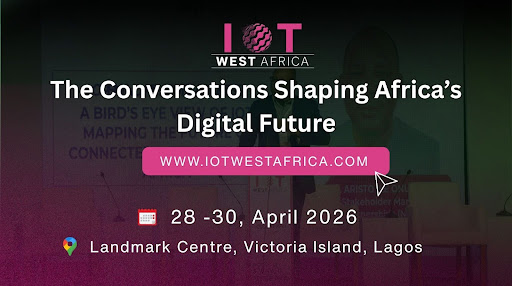 The voices shaping Africa’s digital future are taking the stage. From AI and IoT to cloud, connectivity and smart infrastructure, IOT West Africa | Data Centre & Cloud Expo Africa 2026 brings together the leaders building the continent’s next digital chapter. This is where the ecosystem meets, and we’ll see you there. The event kicks off on April 28–30 at the Landmark Centre, Victoria Island, Lagos. Register here to attend.
- All roads lead to Nairobi on 7 May 7, 2026. Senior leaders from across Africa’s fintech and payments ecosystem will gather for a day of meaningful connections, market insights, and cross-border collaboration. With less than two months to go, the focus of the Africa Fintech Live event is on driving real engagement, bringing together industry leaders, and emerging innovators to spark strategic conversations that will shape the future of finance on the continent. Secure your early bird ticket now at 50% off.

Written by: Emmanuel Nwosu and Opeyemi Kareem
Edited by: Emmanuel Nwosu
Want more of TechCabal?
Sign up for our insightful newsletters on the business and economy of tech in Africa.
- The Next Wave: futuristic analysis of the business of tech in Africa.
- Francophone Weekly by TechCabal: insider insights and analysis of Francophone’s tech ecosystem
P:S If you’re often missing TC Daily in your inbox, check your Promotions folder and move any edition of TC Daily from “Promotions” to your “Main” or “Primary” folder and TC Daily will always come to you.

Comments
Post a Comment