

Happy pre-TGIF.
Elon Musk got a double whammy yesterday, at home and abroad. OpenAI CEO Sam Altman testified against him in court, saying Musk wanted control of OpenAI for himself and even floated passing it to his children. And back home in South Africa, talks over equity equivalence rules that would have let Starlink operate in the country appear to be dead. Read more in today’s newsletter.
—Emmanuel
Get smarter about Francophone Africa with our newsletter, Francophone Weekly—the startups, tech policies, and institutions building the pipelines for ecosystem growth.

companies
South Africa says it won’t cancel this critical rule keeping Starlink locked out

If Starlink, the Elon Musk-owned satellite Internet company, had any hope of a South African entry, that future just got bleaker.
The country is ten toes down. It won’t consider the equity equivalence programme suggested by Solly Malatsi, the country’s communications minister, in 2025, and will stick with the Black Economic Empowerment (BEE) rule that has stood for over 20 years.
On Wednesday, the Independent Communications Authority of South Africa (ICASA), the country’s telecoms regulator, pushed back against Malatsi’s plan to create a workaround that would allow Starlink and other foreign telecom companies to operate in the country without giving up 30% equity ownership under BEE rules.
Understand this first: South Africa’s Electronic Communications Act (ECA) requires telecom licence holders to have at least 30% ownership by historically disadvantaged groups. That is the exact requirement Starlink says it cannot comply with.
Malatsi had spent months pushing Equity Equivalent Investment Programmes (EEIPs) as an alternative. EEIPs allow companies to meet empowerment obligations through investments like infrastructure projects or local development initiatives. Starlink had also pledged to commit capital to community development under this route. All of that is now off the table.
ICASA remains rigid in its reasoning: It says the ECA does not allow that flexibility; unless the law changes, the workaround cannot move forward.
Starlink now has two realistic paths. One, accept the 30% ownership structure, which seems unlikely given that it hasn’t done so in any of the 26 African countries it operates in, and given Musk’s repeated public criticism of South Africa’s race-based ownership rules. Two, establish a local subsidiary, though that offers no guarantee either; Starlink said it had tried something similar in Namibia and was still rejected by regulators.
The situation is further complicated by Musk’s deteriorating relationship with South African officials. In April, he called Clayson Monyela, the country’s Head of Public Affairs, unprintable names in an X post, straining an already tense relationship.


We Have Secured the Bank of Ghana EPSP Licence.
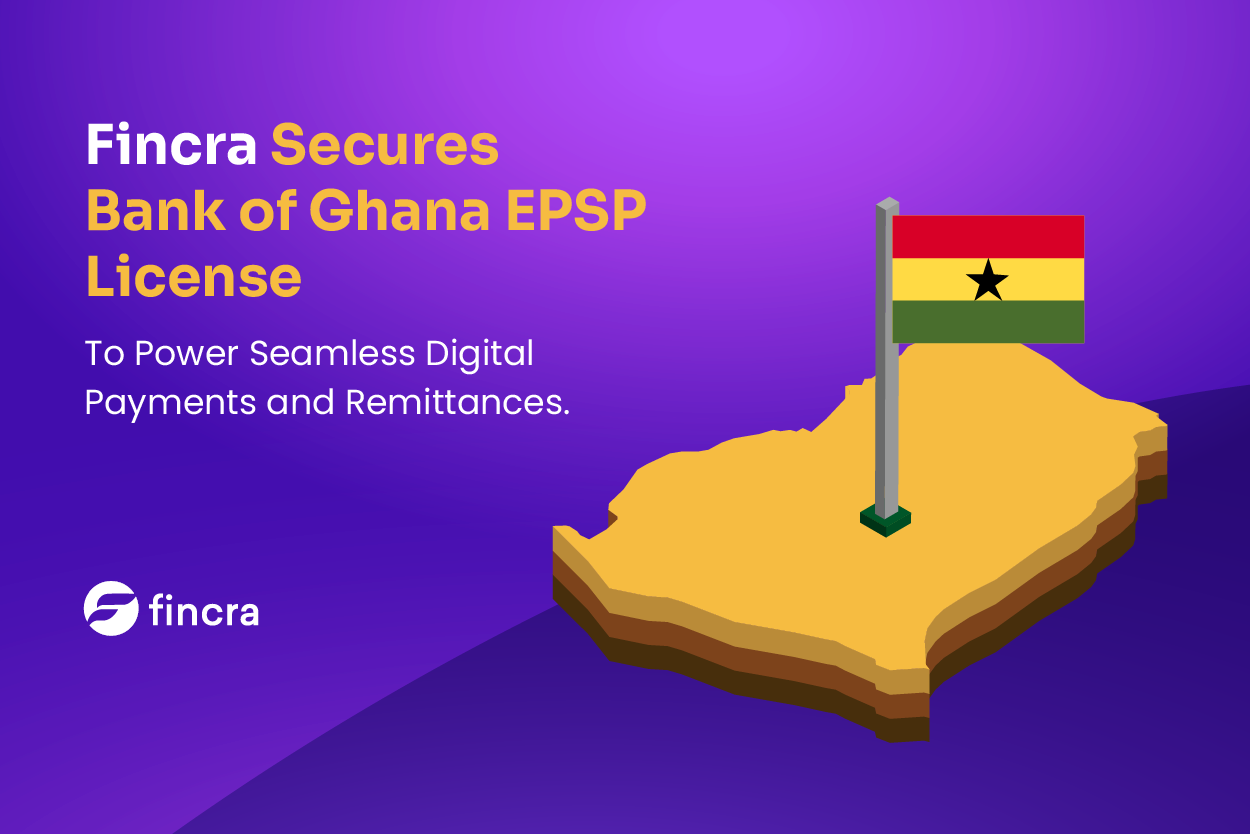
With our new Enhanced Payment Service Provider licence, we can help businesses collect, process and settle in cedis directly. Start here.
government
Cameroon has taken over Société Générale’s local bank

The Cameroonian government has completed the acquisition of the local subsidiary of Société Générale (SocGen), a French multinational bank and financial services company.
Cameroon bought the French bank’s 58.08% stake, pushing its total ownership to 83.68%. The country said the takeover is temporary and designed to manage SocGen’s exit while creating room for new strategic investors later.
The government has already renamed the lender as the General Bank of Cameroon.
It’s not unheard of: African governments have historically held stakes in telecom and financial infrastructure businesses before gradually reducing ownership by selling to private entities.
The Cameroonian government already holds stakes in lenders like Union Bank of Cameroon, NFC Bank, and Commercial Bank of Cameroon. The Kenyan government also held a stake in Safaricom before gradually selling portions over time.
The great European bank retreat? Over the last few years, foreign lenders have either reduced their footprint in African markets or exited certain countries entirely. SocGen itself has sold subsidiaries in Congo, Chad, Equatorial Guinea, and Mauritania. Standard Chartered has exited markets in Gambia and Tanzania to focus on its wealth management banking.
This doesn’t necessarily mean that Africa is bad business. In many cases, these global banks are retreating to focus on markets where they see the most scale.
What’s Cameroon’s play here? SocGen’s local subsidiary is one of the country’s biggest banks; allowing a sudden exit without a transition plan could have disrupted lending activity in the banking sector. By stepping in temporarily, the government intends to keep the bank’s operations stable and eventually open it to national and international strategic investors.
Unlimited free transfers on PalmPay
PalmPay guarantees you unlimited free transfers to all banks in Nigeria and a 99.9% transaction success rate. We are making digital banking safer, simpler, and more reliable for everyday Nigerians. https://bit.ly/PalmPay-ng
companies
Chimoney, a fintech startup, is shutting down

Chimoney, the Nigerian-Canadian fintech that built a single application programming interface (API) for cross-border payments across 41 currencies, has shut down after four years.
The Canada-based startup, founded by Uchi Uchibeke and backed by the Techstars Toronto Accelerator, stopped accepting new transactions on April 30 and is refunding all customer wallet balances through August 31, 2026.
Chimoneyraised under $1 million across its entire lifespan. It held aFinancial Transactions and Reports Analysis Centre of Canada (FINTRAC) Money Services Business (MSB) licence and was among the first companies to receive a Payment Service Provider (PSP) licence under the Bank of Canada’s Retail Payments Activities Act (RPAA). That kind of regulatory credibility costs money to build and money to maintain.
Chimoney’s story is really a story about what Africa’s fintech ecosystem chooses to fund. The companies building payment rails and compliance infrastructure are a harder sell to early-stage investors than the consumer apps sitting on top of them. Chimoney had paying customers and four years of runway, but the capital never showed up to match the ambition.
The startup said it notified investors and customers of the shutdown, opening a window until August 31 for withdrawals. It writes the end of one of the products that set out to do something really imaginative: to help businesses send cross-border payments over email. But even more, Chimoney won’t strike many as a popular startup, given how it was seldom mentioned in popular media.
But Uchibeke, who has already pivoted to the next thing, said his major lesson is that he built more than he sold, and in fintech, that imbalance could be unforgiving.
Nigeria’s Sports Marketing Intelligence Report 2025

A football conversation no longer ends at the final whistle. It continues online, in culture, and in consumer behaviour. The Brila Sports Marketing Intelligence Report 2025 explores how brands can truly connect with today’s sports audience. Download the report here.
policy
Kenya proposes 25% phone levy tied to SIM activation
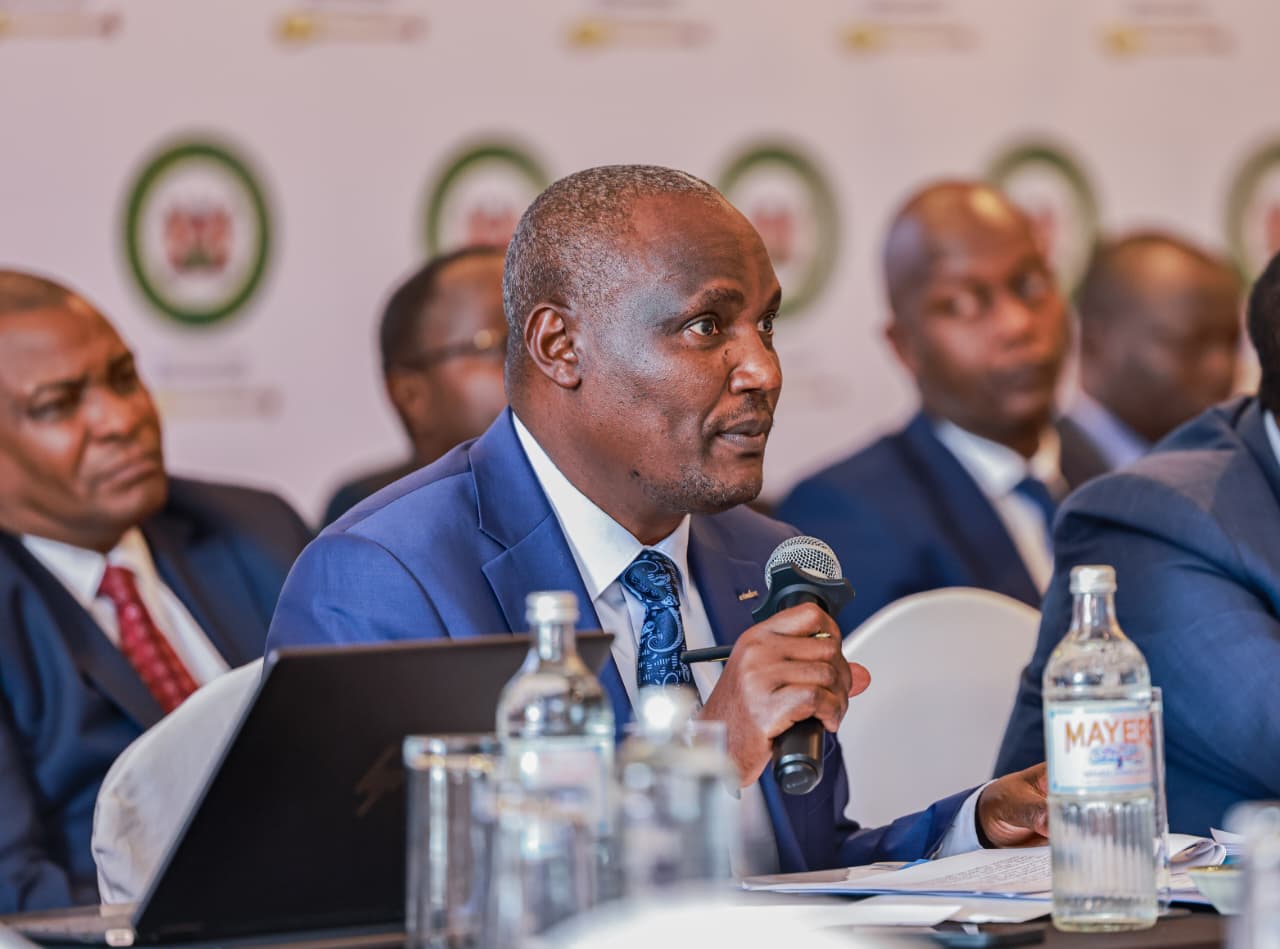
Every phone switched on in Kenya has become taxable. Kenya’sFinance Bill 2026 proposes a 25% excise duty on all mobile phones, but with a twist: the tax would be charged not at import, but at the moment a device is first activated on a network.
Treasury Cabinet Secretary (CS) John Mbadi has beenquick to defend it. His argument: phones currently attract a pile-up of charges, Import Declaration Fee, Railway Development Levy, Value Added Tax (VAT), and customs duty, that together push the effective tax burden to roughly 55%.
The new 25% excise duty, he said, consolidates all of that into one simpler levy. But tax expertspoint to an unresolved operational question his defence doesn’t answer: who actually remits the levy, telecom operators, importers, or distributors? Until that’s clear, the risk of it being passed to consumers as a price increase remains real.
Between the lines: Kenya had 48.7 million smartphones on its networks by December 2025, versus 29.6 million feature phones. The country got there partly through buy-now-pay-later (BNPL) schemes and low-cost Android devices that made smartphones accessible to low-income users. A tax that raises entry-level device prices, even marginally, works directly against that momentum.
Zoom out: The Finance Bill 2026 is targeting an additionalKES 120 billion ($928 million) in revenue for the upcoming fiscal year. The phone tax is one piece of that. Whether Mbadi’s consolidation argument holds in practice will depend entirely on implementation, and Kenya has learned before that tax simplification on paper does not always mean simplification at the till.
50 Finalists, 30 Winnesrs at the South East Pitch Competition this May

The South East’s first institutional venture capital program is here. Startups competing for SAFE investments. Grand Finals: 25 May | Investment Day: 26 May 2026. Register to attend.
CRYPTO TRACKER
The World Wide Web3
Source:

|
Coin Name |
Current Value |
Day |
Month |
|---|---|---|---|
 Bitcoin Bitcoin |
$79,407 |
– 2.07% |
+ 6.79% |
| Ether |
$2,256 |
– 1.91% |
– 4.44% |
| XRP |
$1.43 |
– 1.89% |
+ 4.93% |
| Solana |
$90.54 |
– 4.91% |
+ 5.59% |
* Data as of 06.19 AM WAT, May 14, 2026.
Events
- The Africa Tech Summit London 2026 is back for its 10th edition. Held at the London Stock Exchange building in London on May 29, the event will feature 350 attendees from over 200 companies in a small, high-impact gathering of founders, investors, and global partners driving the future of tech in Africa. Use the code TC10 to get 10% off tickets. Apply to attend.

Written by: Zia Yusuf and Opeyemi Kareem
Edited by: Emmanuel Nwosu and Ganiu Oloruntade
Want more of TechCabal?
Sign up for our insightful newsletters on the business and economy of tech in Africa.
- The Next Wave: futuristic analysis of the business of tech in Africa.
- Francophone Weekly by TechCabal: insider insights and analysis of Francophone’s tech ecosystem
P:S If you’re often missing TC Daily in your inbox, check your Promotions folder and move any edition of TC Daily from “Promotions” to your “Main” or “Primary” folder and TC Daily will always come to you.

Comments
Post a Comment