

Happy midweek. 
Let’s dive in.
Become smarter about tech and commerce in Francophone Africa, and the policies shaping them. Read our newsletter here first or subscribe below.

Fintech
Nigeria-focused fintech PalmPay mulls public listing in Hong Kong
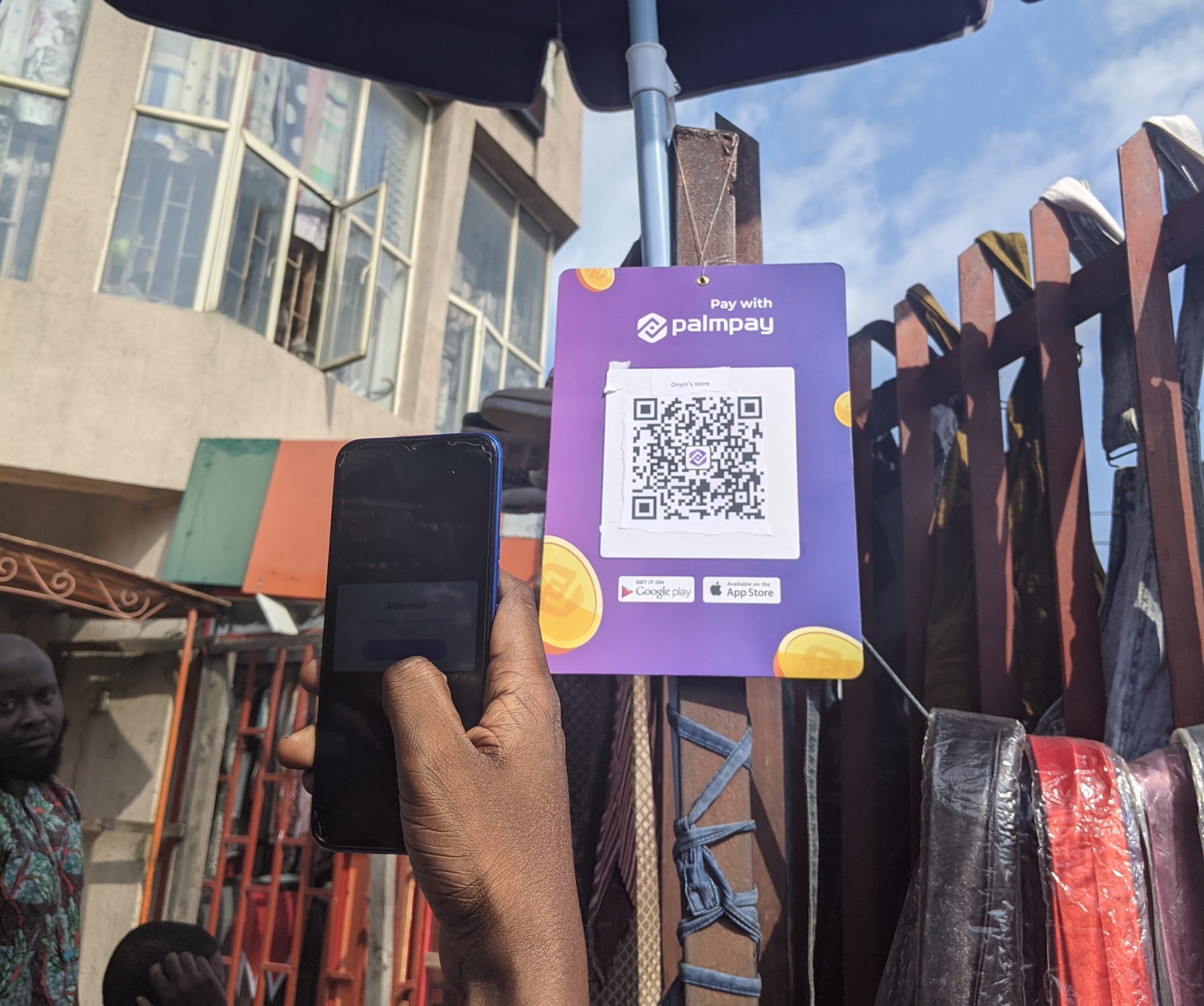
OPay and PalmPay. Two Chinese-backed fintech apps with a presence in Nigeria. Both of them play in the mobile money space. One of them green, the other purple. Both of them want to go public; OPay is targeting the United States in a $4 billion listing, announced in May, and now, PalmPay is heading to Hong Kong, Bloomberg reported.
The more interesting part is that Chinese investors may now have an exit pipeline for Africa-focused tech companies—and rather unsurprisingly, it’s not on African stock exchanges.
According to Bloomberg, PalmPay, a profitable fintech, is discussing a funding round that could raise about $200 million and value the company at over $1 billion. The company is also preparing for a potential Hong Kong listing, though the plans are still under discussion.
Explain like I’m new here: PalmPay launched in Nigeria in 2019 with backing from Chinese smartphone manufacturer Transsion Holdings and semiconductor giant MediaTek, and most recently expanded into South Africa, Côte d’Ivoire, Uganda, and Tanzania. Transsion owns the Tecno, Infinix, and itel brands that dominate much of Africa’s smartphone market, giving PalmPay a distribution advantage that few fintech startups enjoy.
Between the lines: A Hong Kong listing is the part that makes this interesting. Most African fintechs have traditionally looked to New York or London for initial public offerings (IPOs). PalmPay is pointing in a different direction, toward Hong Kong Exchanges and Clearing (HKEX), which has become one of the world’s busiest equity fundraising venues.
The timing is not random. HKEX finished 2025 as the world’s largest IPO fundraising market, raising $37.4 billion across 119 listings, while listings on second-placed NASDAQ raised less than $30 billion, excluding special purpose acquisition company (SPAC) listings, which are shell companies that raise money first and later merge with a private business to take it public.
Equity capital market fundraising in Hong Kong reached $103 billion, while technology, media, and telecommunications (TMT) companies alone raised $34.5 billion, the second-highest tech fundraising total globally. If PalmPay goes through with its Hong Kong listing plan, it will also be in the company of Chinese conglomerates Tencent and Alibaba, which went public on HKEX in 2004 and 2019, respectively, raising a combined $11.2 billion (not adjusted for inflation).
Zoom out: If OPay reaches Wall Street and PalmPay reaches Hong Kong, Nigeria’s mobile money wars will have produced something unusual: two Chinese-backed African fintechs taking two completely different routes to the public markets.


Getting paid in cedis just got easier for African businesses operating in Ghana.

Fincra now issues dedicated GHS virtual accounts to enable businesses to collect payments. See how Fincra GHS virtual accounts work.
Fintech
Canal+ backs Moment as it expands beyond MultiChoice
We have argued before that MultiChoice’s future may extend well beyond television, and Moment’s latest funding round strengthens the case that payments could become a significant part of that story, as the pay-TV giant continues to revive its premium streaming ambitions under French owner Canal+.
Moment, the Cape Town-based payments company spun out of MultiChoice’s fintech ambitions, has raised $22 million in a Series A round led by AlphaCode Venture Partners, bringing its total funding to $55 million. The round includes fresh backing from Canal+, which completed its takeover of MultiChoice and listed on the Johannesburg Stock Exchange (JSE) in June.
Explain like I’m new here: Moment was launched in 2023 as a joint venture between MultiChoice, Rapyd, and General Catalyst. The original idea was simple but clever: use MultiChoice’s enormous subscription payment flows—then processing about $3.5 billion annually across 22 million households—as the anchor for a broader African payments platform.
The interesting part is that Moment is gradually escaping its parent’s shadow. After its 2024 seed extension, about 95% of its processing volumes still came from MultiChoice South Africa and Showmax South Africa. Today, the company says it is processing payments for 10 million people every month, supports over 2 million physical payment locations, and handles about 600,000 transactions a day across third-party enterprise clients.
Canal+’s involvement is the clearest signal yet that the French broadcaster sees payments as more than a side project. The streaming wars are expensive. Subscription billing infrastructure, recurring payments, and merchant acceptance networks are much less glamorous—and potentially much more durable.
Zoom out: The satellite dish may still be MultiChoice’s public face. But increasingly, the payment rail behind the subscription could become its more valuable business.
Download PalmPay. Bank smarter.

With PalmPay, you can bank with confidence. Enjoy seamless everyday banking with security features designed to help protect your money. Send money, pay bills, and manage your finances all in one app. Learn more.
Telecoms
In May, Globacom recorded the highest number of Internet subscribers in Nigeria

As they say, data is life. And for telecom operators, the more people who troop onto their networks, the healthier the business looks. In May, Nigeria’s Internet subscriber base grew by 2.67 million users, and Globacom, the country’s third-largest telecom operator, accounted for nearly half of that surge.
What’s happening? The latest figures from the Nigerian Communications Commission (NCC), the country’s telecom regulator, show Nigeria had about 157 million Internet subscribers in May 2026, up from 154.3 million in April. Globacom led the pack, adding roughly 1.2 million subscribers to reach 16.8 million. Airtel Nigeria came second, adding 1.07 million to hit 55.8 million, while MTN Nigeria—the market leader—added 382,894 users to reach 83.5 million.
The laggard was T2 Mobile, formerly 9mobile, which recorded zero growth for the second consecutive month, stuck at 802,534 subscribers. That stagnation is notable because T2 has had a national roaming agreement with MTN Nigeria since May 2025, allowing its users to piggyback on MTN’s network where T2 coverage is weak. So far, that deal hasn’t translated into visible growth.
What else? Globacom’s surge isn’t accidental. The operator has been running aggressive promotions, including a “Welcome-Back” offer targeting subscribers whose lines have been inactive for at least 90 days, and device promotions that tie smartphone purchases to data benefits and eSIM offers.
Zoom out: Globacom’s growth is a reminder that in Nigeria’s telecom market, affordability still wins. While MTN and Airtel battle for premium subscribers, Globacom has competed on price, and it’s working. With Nigeria’s total Internet subscribers approaching 160 million, the fight is shifting from who can sell the most SIM cards to who can keep users active and spending. For Globacom, the challenge is turning promotional subscribers into loyal, high-usage customers before the next price war begins.
Naira Life 2026 is here!

The Naira Life Conference 2026 is bringing together Nigeria’s top finance minds, industry leaders, creators, and business strategists for a full-day of specialised sessions and masterclasses designed for ambitious Nigerians who want to make, keep, grow, and pass on real wealth. Happening on August 22 at the Jewel Aeida, Lekki, Lagos. Secure a seat in the room.
Clean-tech
Kenya limits carbon credit exports to 10 million tonnes

Kenya has finally admitted something that has made many climate economists uncomfortable for years. If you keep selling all your carbon credits abroad, you might eventually run out of them for yourself.
The government has capped carbon credit exports at 10 million tonnes of carbon dioxide equivalent (CO₂e) between now and 2030. The ceiling is designed to stop local developers from transferring too many emission reductions to foreign buyers and leaving Kenya short of the carbon reductions it needs to meet its own Nationally Determined Contributions (NDCs) under the Paris Agreement.
Explain like I’m new here: A carbon credit represents one tonne of carbon emissions that was either prevented from entering the atmosphere or removed from it. Projects such as solar power plants, electric bus fleets, methane-capture facilities, and reforestation programmes can earn these credits and sell them to companies or governments looking to offset emissions they cannot yet eliminate.
What Kenya is doing differently is treating carbon credits less like a commodity to export and more like a strategic national resource. The new framework introduces a carbon budget that tracks how many credits remain available for international transfer and prioritises sectors such as electric mobility, renewable energy, energy access, industry, and waste management.
This matters for African cleantech startups. Until now, many climate ventures have relied heavily on selling carbon credits to international buyers. Kenya is signalling that future projects will be judged not only by the carbon revenue they can generate, but also by how much they contribute to the country’s own climate targets, energy transition, and industrial development.
The timing is important. The export cap arrives just weeks after Kenya announced plans to launch a local carbon exchange by March 2027 and six months after rolling out a National Carbon Registry to track ownership and transfers.
Zoom out: Kenya is joining South Africa and Nigeria in putting guardrails around carbon credit exports. Africa’s climate economy is slowly moving from “sell offsets to the world” to “use carbon markets to finance national development first.”
Moonshot is back!

Moonshot 2026 is coming! Join us at the National Theatre, Lagos on October 28 & 29 for two days of tech and innovation. Grab your early bird tickets now and get 15% off.
CRYPTO TRACKER
The World Wide Web3
Source:

|
Coin Name |
Current Value |
Day |
Month |
|---|---|---|---|
 Bitcoin Bitcoin |
$62,749 |
– 1.06% |
+ 0.41% |
| Ether |
$1,855 |
– 1.09% |
+ 5.62% |
| Biconomy |
$0.01471 |
+ 23.91% |
– 4.96% |
| Solana |
$72.80 |
– 0.91% |
– 12.44% |
* Data as of 06.40 AM WAT, August 5, 2026.
Opportunities
- Creative Economy Accelerator Programme. The programme is open to African startups building in music, film and media, design, and creative tech. Selected startups will receive between $20,000 and $50,000 in funding and support. Apply here by August 28.

- Yellow Card raises $40 million in strategic funding from investors, including SC Ventures, Sony Innovation Fund, Polychain Capital, Blockchain Capital, and others
- Nigeria’s 90,000km fibre project awaits incorporation of SPV
- Francophone Weekly: AI agents and state contracts power Côte d’Ivoire’s startup push
Written by: Emmanuel Nwosu and Zia Yusuf
Edited by: Emmanuel Nwosu & Ganiu Oloruntade
Want more of TechCabal?
Sign up for our insightful newsletters on the business and economy of tech in Africa.
- The Next Wave: futuristic analysis of the business of tech in Africa.
- Francophone Weekly by TechCabal: insider insights and analysis of Francophone’s tech ecosystem
P:S If you’re often missing TC Daily in your inbox, check your Promotions folder and move any edition of TC Daily from “Promotions” to your “Main” or “Primary” folder and TC Daily will always come to you.

Comments
Post a Comment