

Happy midweek. 
One small favour: if TC Daily lands in Spam or Promotions, move it to your Primary inbox so tomorrow’s edition finds you there.
In other news: We’re still looking for stories from people whose journeys changed at Moonshot—met a co-founder, investor, partner, or future employer there? Tell us about it.
Let’s dive in.
Read smart insights about Francophone Africa’s tech ecosystem—weekly.

Regulation
Kenya proposes up to $1.93 million paid-up capital for fintechs

Kenya wants payment companies to have much more money in the bank before they can operate. A new bill proposes capital requirements of up to KES 250 million ($1.93 million), with existing providers getting one year to comply.
Explain like I’m new here: Kenya’s payment market has grown around companies that could start small, raise funding, and build from there. The proposed National Payment System Bill, published on Monday, could change the starting point.
A payment company would need core capital ranging from KES 5 million ($39,000) for basic data services to KES 250 million ($1.93 million) for electronic money issuers. The money must come from fully paid-up shares and disclosed reserves. Founder loans, borrowed money, and convertible debt would not count towards the required capital.
Companies holding more than one licence would face a higher bill. An electronic money issuer that also operates an electronic wallet could need KES 275 million ($2.1 million).
Between the lines: The interesting part is not just the size of the capital requirements, but what qualifies as capital. A startup can raise money through a convertible note or founder loan, while it is still finding product-market fit. Under the proposed rules, neither would help it meet the licencing threshold.
For startups, this could make equity financing more important when applying for a licence.
Not every player would face the same licencing route. Commercial banks, microfinance institutions and state-owned enterprises could operate payment services with Central Bank of Kenya (CBK) authorisation, rather than a full payment licence, as long as they meet their existing capital requirements. Startups, meanwhile, would have a sandbox to test payment products before taking on the full licencing requirements.
Why this matters: Kenya has spent years building a fintech market where small companies could experiment around the infrastructure created by M-PESA and banks. The proposed rules could make capital a bigger filter for who gets to compete.
Zoom out: The rules could give regulators more assurance that licenced payment firms have enough capital behind them. But could the higher capital bar also make it harder for smaller startups to reach the point where they can compete at scale?


Every business owner needs to watch this.

The business questions you Google, answered by experts. Watch for free .
Fintech
Kenya wants to open the bank data vault
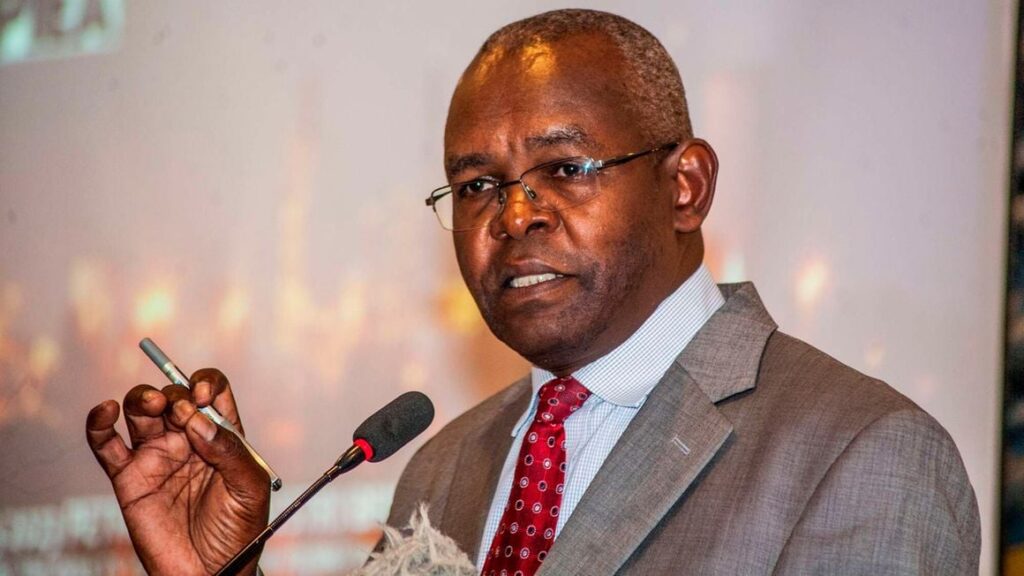
In more Kenyan news, the country is proposing one of its biggest changes to how banks and fintechs compete. A new payments bill would let customers authorise fintechs to access their bank or mobile money data and give the Central Bank of Kenya (CBK) the power to require providers to make that access possible.
Explain like I’m new here: Today, your bank knows what you earn, spend, and save. Your mobile money provider knows who you send money to and how often. The information is useful because it gives providers a detailed picture of your finances.
Open banking would cover two different services under the proposed bill. Customers could authorise licenced fintechs to access information from their bank or mobile money accounts, while another type of fintech could initiate payments on their behalf. The bill creates a licence for each service.
Between the lines: Banks and M-PESA have spent years building products around customer-generated data. If a rival fintech can pull that data, with permission, it can build services without owning the account where the money sits.
Think of a company showing your bank, M-PESA, and other financial accounts in one place. Or one that uses your transaction history to offer a financial product without being your bank.
CBK has not yet fully developed the regulations, so the bill leaves questions about what data can be shared, how access will work, and whether fintechs can charge for it under future regulations.
Why this matters: Open banking could make switching between financial services easier and give smaller fintechs access to information they currently cannot get.
If Parliament passes the bill, providers will have one year to comply. Banks, fintechs and mobile money companies would then have to make their systems work with competitors.
Your stablecoins can now earn up to 7%

As stablecoin use grows across emerging markets, Raenest is expanding what users can do with USDC and USDT. In addition to sending and spending stablecoins globally, Raenest has launched Stablecoin Vault, which lets eligible users earn up to 7% variable APY. Learn more at www.raenest.com.
Ecommerce
South African retailer Pick n Pay names new CEO
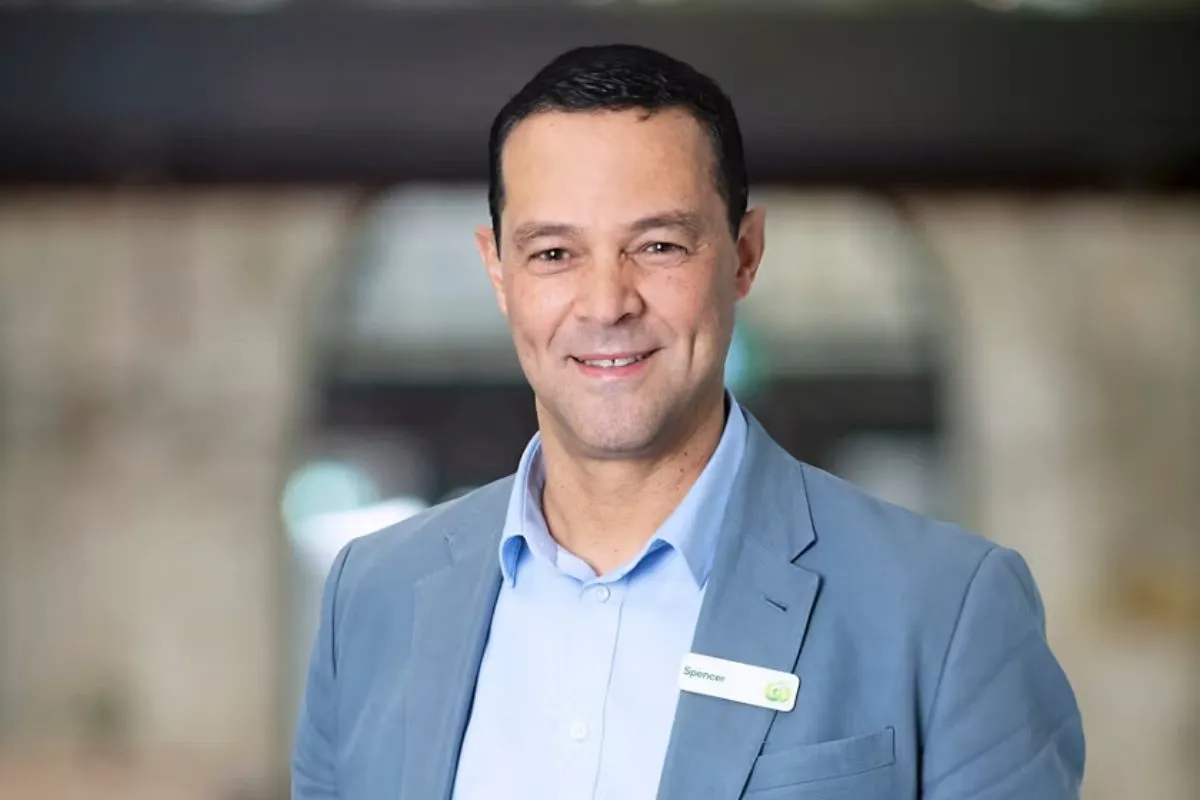
Pick n Pay, the South African chain supermarket group, has named Spencer Sonn, a former Woolworths Food executive, as its next chief executive officer (CEO), bringing in a 26-year Woolworths veteran to take over from Sean Summers in February 2027. Sonn spent five years running Woolworths South Africa’s food business, giving him experience in the exact grocery battlefield Pick n Pay is trying to win.
Explain like I’m new here: Pick n Pay’s problem was never just one bad quarter. Years of pressure on its core supermarkets eventually forced the retailer into a three-year turnaround. Summers returned as CEO in 2023, then led a R12.5 billion ($700 million) recapitalisation through a rights offer and the separate listing of Boxer, its discount grocery business.
Under Summers, the retailer also closed or exited underperforming stores. Across financial year 2025 (FY25) and FY26, Pick n Pay cut its estate by 98 company-owned and franchise supermarkets.
Yet, that reset has worked unevenly. Boxer continued to outperform, growing turnover by 12.3% to R42.6 billion ($2.63 billion) in FY26 and lifting trading profit by 11.9% to R2.6 billion ($160.5 million). But Pick n Pay’s core supermarket operation remained loss-making: its trading loss after lease interest widened to R1 billion ($61.7 million) in FY26, from R500 million ($30.9 million) in the previous year, even as group turnover rose 3.4% to R120.3 billion ($7.42 billion). The company has consequently deferred the core supermarket business’s break-even target by a year, to FY29 from FY28.
Between the lines: Sonn now has to make the remaining supermarket business earn its keep. The strategy is becoming two-pronged: Boxer, the value-led discounter, drives growth, while Pick n Pay, the mainstream supermarket brand, focuses on rebuilding competitiveness through better pricing, product availability, fresh food, store productivity and a leaner cost base. The challenge is making the latter profitable without losing the brand’s relevance.
Zoom out: Sonn inherits a smaller, recapitalised retailer. His appointment is about proving the business rescue can stick, possibly drawing on lessons from his time at Woolworths Food to help close that gap.
Flam raises $40 million in Series B funding to scale digital interactive content

Flam raises $40M Series B led by QED Investors to scale AI interactive content. With 100+ enterprise customers globally, Flam is expanding in Nigeria through exclusive partner SmartSense Technologies, bringing interactive AI to local brands. Read more.
Companies
Zipline expands its drone delivery network in Côte d’Ivoire

Zipline, the US drone logistics company, has signed an eight-year deal with Côte d’Ivoire, expanding a three-year health-delivery pilot into a national network that could serve 12 million people, about a third of the country’s population.
The company will add nine facilities to its existing operation, which has delivered nearly 4 million medical products to more than 200 healthcare centres since 2023.
Explain like I’m new here: Zipline is not simply selling drones. The company runs the infrastructure around them, including warehouses, cold-chain storage, digital tracking, and delivery. Côte d’Ivoire’s government will pay the operating costs for eight years. Zipline says the government expects a three-fold return on its investment.
Between the lines: This is the part worth watching. African governments are moving from testing drones as a clever solution for hard-to-reach areas to treating drone delivery as part of the health-supply system itself. For Zipline, an eight-year contract changes the business from project-by-project deployments into recurring infrastructure revenue.
The model also fits a bigger expansion push. Zipline has operated in Africa since 2016 and is expanding in Nigeria—its biggest African market—with 12 new hubs. The drone company has raised about $2 billion globally and is discussing another $1 billion funding round at a valuation near $20 billion, Bloomberg reported.
Zoom out: Governments could become Zipline’s infrastructure customers, while the company uses the same network for everything from medicines to food and other time-sensitive deliveries. Like its other African operations, Côte d’Ivoire is a useful, expansive test of whether drones can become boring, dependable public infrastructure.
Don’t miss Moonshot 2026 for anything in the world!

True scale demands moving beyond surface-level integrations to robust execution. We’ve filtered the noise out of Moonshot 2026, optimising the conference strictly for high-calibre connections between startup founders, global financial operators, enterprise leaders and individuals rewiring Africa’s technical frameworks. Join us on October 28 & 29, 2026. Get your ticket.
CRYPTO TRACKER
The World Wide Web3
Source:

|
Coin Name |
Current Value |
Day |
Month |
|---|---|---|---|
 Bitcoin Bitcoin |
$86,920 |
+ 1.88% |
+ 12.69% |
| Ether |
$2,770 |
+ 1.72% |
+ 12.86% |
| Bitcoin Cash |
$340.37 |
+ 28.65% |
+ 25.59% |
| Solana |
$119.11 |
+ 2.47% |
+ 26.26% |
* Data as of 06.30 AM WAT, September 23, 2026.
Opportunities
- The Citi Foundation is offering $500,000 grants to 50 organisations that help low-income young people build AI and other job skills. The grants can support programmes that teach skills such as prompt engineering and digital content creation, help young people find jobs, provide access to devices and software, or add AI tools to existing employment programmes. Applications close on October 6, 2026, at 5 p.m. Lagos time. Apply here.

- Francophone Weekly: Why the payment network WAEMU built has stalled
- Safaricom hits 1 million home internet users. Now comes the hard part
- America is in the wrong AI race with China
- Zuku pay-TV clients dip 16pc as MultiChoice, Azam gain
- WeTransfer founder joins Prosus in AI leadership shake-up
- Warren Wheatley resigns as Africa Bitcoin Corporation CEO
Written by: Emmanuel Nwosu and Kenn Abuya
Edited by: Emmanuel Nwosu & Ganiu Oloruntade
Want more of TechCabal?
Sign up for our insightful newsletters on the business and economy of tech in Africa.
- The Next Wave: futuristic analysis of the business of tech in Africa.
- Francophone Weekly by TechCabal: insider insights and analysis of Francophone’s tech ecosystem
P:S If you’re often missing TC Daily in your inbox, check your Promotions folder and move any edition of TC Daily from “Promotions” to your “Main” or “Primary” folder and TC Daily will always come to you.

Comments
Post a Comment