Omolara Daniel sits at her laptop, describing the logo she wants in painstaking detail.
She tells an AI tool what she wants the design to look like, waits for it to generate the image, then asks the tool to describe what it has produced. If the description does not match the picture in her mind, she prompts it again.
When she is satisfied, she sends the design to a friend for a final check. Daniel is blind. She cannot see the logo she has just created.
“I just enjoy doing this. It is becoming something that makes me want to give AI a big thumbs up every day,” she says.
Finding ways to work independently
The designs are only one part of the business Daniel runs largely on her own.
From her home, she runs Cura Heritage Foods Ltd, formerly Tosaf Foods, where she produces natural spices, cereals, and snacks. She handles production, sales, and marketing herself.
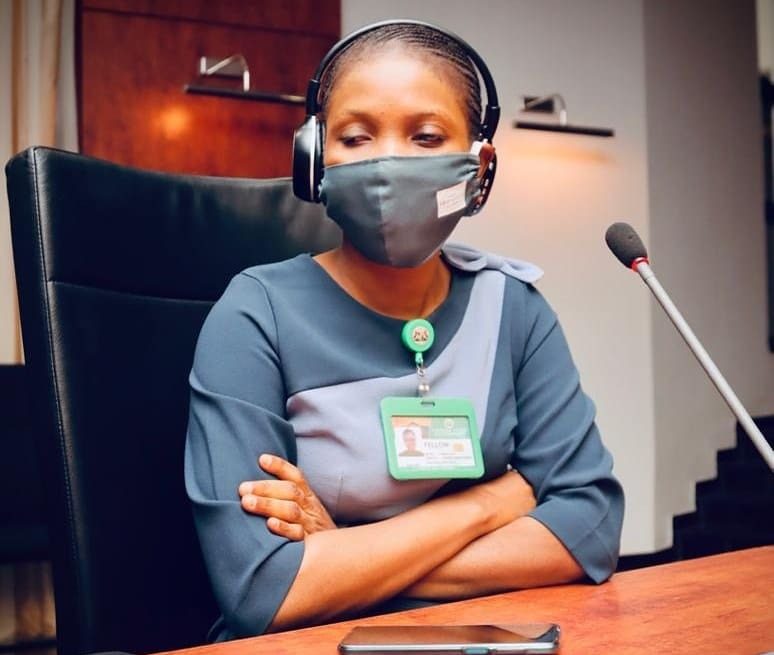
“I have the sole responsibility for my business currently,” she says. “I don’t have any staff. I manage both production, sales and even marketing.”
Her production process begins at the market, where she sources the ingredients she needs. Back home, she cleans and detoxifies them before putting them through a dehydrator. She measures the ingredients with a talking scale, blends them in her milling machine, and packages the finished products herself.
She has gradually adapted each stage of the process so she can work with less assistance. When she started the business, she used a regular digital scale and depended on sighted people to tell her what she had measured. She eventually bought a talking scale that announces the weight aloud.
“With or without anybody, I can single-handedly manage my production process,” she says.
The next challenge was creating the visual content she needed to market the business.
Seeing through AI
For Daniel, visual content was once an area where independence stopped. Much of the work depended on details she could not see, so she initially relied on other people to create or review it.
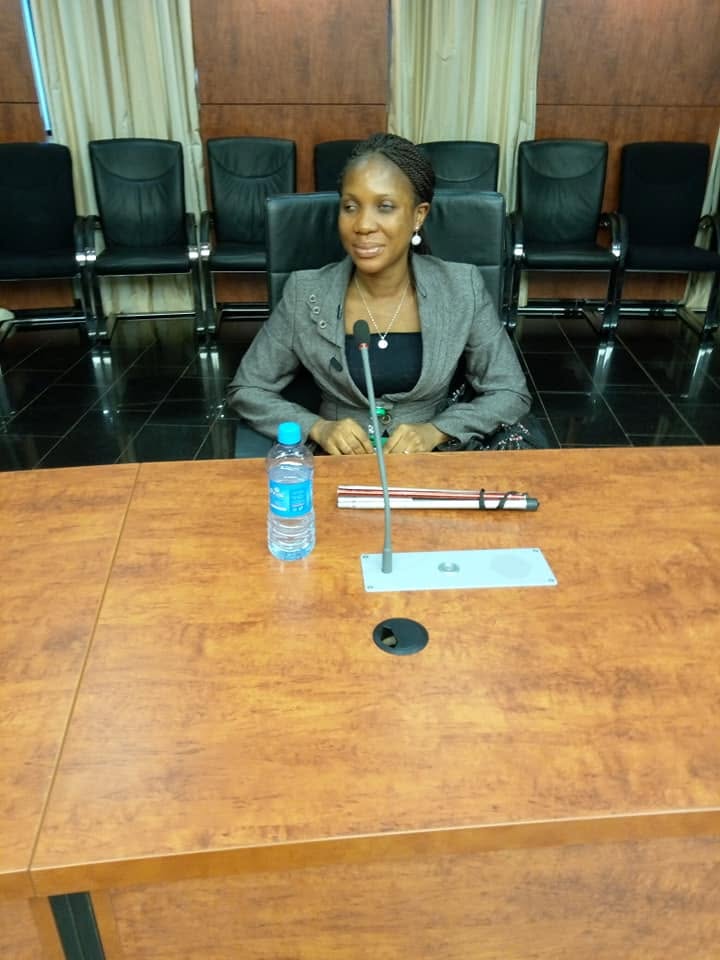
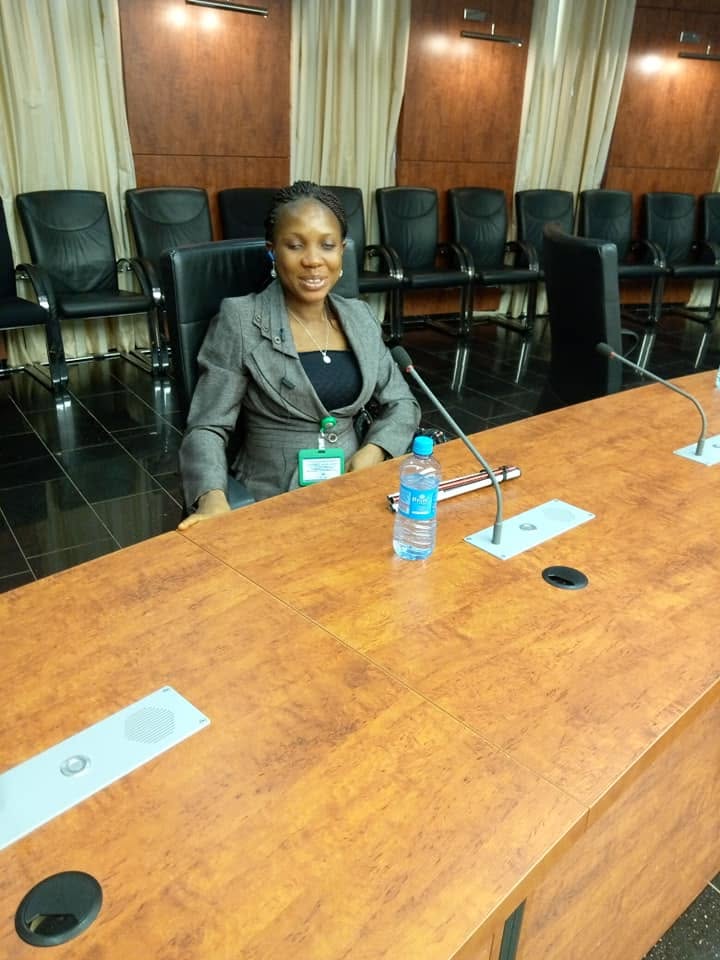
“The first logo I did for my business was designed for me by a graphic designer,” she says. “[At the] time, I didn’t have knowledge of how to use AI to do graphics.”
As AI tools became more accessible, Daniel began to wonder whether she could use them herself. She was already interested in technology and did not want her disability to determine what she could learn.
“As a blind person, you don’t want to be behind,” she says. “As technology is advancing, you also want to advance.”
In 2025, while interning in the IT department of the telecoms company MTN Nigeria, she says she was exposed to more technology, including AI. The experience deepened her interest, and she decided to learn more about it, paying for training rather than waiting to pick up the skills for free.
She learned to work with several AI tools, including Claude, Gemini, Veo 3, Google Flow, and Microsoft Clipchamp, using them at different stages of her creative work. But she soon realised that getting the result she wanted depended on how clearly she could communicate her idea to the technology.
“Before you can prompt AI, you yourself need to know what you want,” she says. “The mental notes of exactly how you want something to come out. You need to know it.”
From ideas to visuals
For graphics, Daniel starts with the picture in her mind and gives AI chatbots such as Claude and Gemini what she describes as a vivid account of what she wants. She uses them to refine her ideas and develop detailed instructions before taking those prompts to other tools.
If she has a preferred colour, she specifies it. If she does not, she asks the AI to suggest a suitable combination.
“AI is just like garbage in, garbage out,” she says. “What you want, it’s your prompting at the end of the day.”
For video projects, the process involves several tools.
After refining her prompts in Claude, she moves to Veo 3, where she generates individual scenes rather than attempting to create an entire video at once. She then assembles the scenes in Microsoft Clipchamp.
If a scene does not convey the idea she has in mind, she generates it again and keeps refining it. Once she is satisfied, she sends the work to a friend, sibling or, in some cases, a client for a final check.
The reviewer may identify something that needs to be changed, and Daniel returns to the AI tool to make the adjustment before sharing the work again.
The arrangement sometimes comes with an additional cost. The people helping her review the work may need to download the files or watch the videos, which can consume data.
“Sometimes I have to buy data for them because they also have to download, and some of them will complain, ah, my data,” she says.
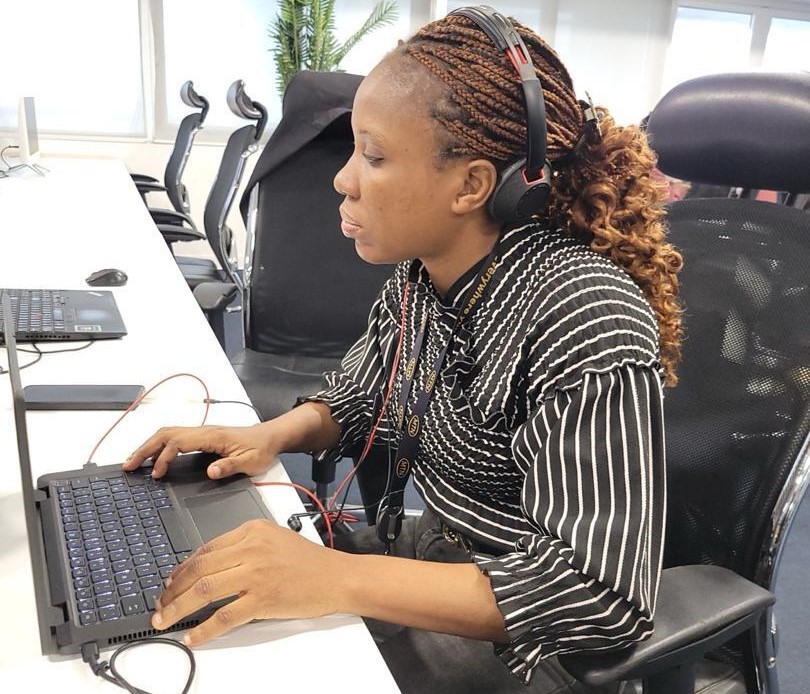
The skill has also become a small side hustle. Daniel occasionally creates logos, flyers and videos for other businesses. Some clients find her through referrals after seeing work she has produced for someone else.
“I have somebody who reached out to me this week because they saw a video that I did for someone,” she says. “I really liked the video. Please, I also want to do for my business.”
The limits of the tools
The finished graphics can make the process look simpler than it is. Daniel says she can usually complete a logo in about an hour, but videos take longer because she creates them scene by scene and relies on others to verify each one.
“They are very stressful to an extent because I have to make and remake,” she says. “Most times I have to make them scene by scene to start with, and then share with people who vet it and let me know that, ‘Oh, this one, the AI didn’t do it well.’”
Some videos have eight or 10 scenes, she says. If one fails to convey the message she intended, she generates it again. And because the people who help her review the work are not always immediately available, a task that might otherwise take minutes can stretch much longer.
Clients can add another layer of difficulty. One flyer once kept her at her laptop for about five hours as a client requested repeated changes. Daniel eventually abandoned the job after the AI repeatedly failed to produce what the client wanted.
Then there is accessibility.
Before settling on the tools she now uses, Daniel tried several others, paying for subscriptions simply to find out whether they worked with her screen reader.
“Many of them are not that accessible, to be honest,” she says. “And many of them, when you hear about them, oh, this one can do this, this one, then you go and check it out, and you see that the interface is not screen reader friendly.”
CapCut was one of the tools she abandoned for that reason.
“Accessibility-wise, a laptop is easier because I can easily flow. Just like a sighted person will flow,” she says. “When I try to do things on my phone, it slows me down, and I feel like it stresses me mentally.”
Still, the assistance Daniel needs has changed. She is no longer handing the creative work entirely to someone else. She can develop an idea, turn it into detailed prompts, generate the work, and refine it herself, bringing in other people only to verify the visual details she cannot see.
For Daniel, that shift is about more than creating content for her natural foods business or earning an occasional fee from other businesses. It is about having another skill she can carry into whatever comes next.
“The most important benefit of having this skill is personal,” she says. “It is not even for the business side of it, or I want to make money from it. It is the fact that I can do this on my own, and if I walk into any working environment where the skill is needed, I will fit in.”
True scale demands moving beyond surface-level integrations to robust execution. We’ve filtered the noise out of Moonshot 2026, optimising the conference strictly for high-calibre connections between startup founders, global financial operators, enterprise leaders and individuals rewiring Africa’s technical frameworks. Get 20% off Early Bird tickets for a limited time.

Comments
Post a Comment