
Welcome to another week. 
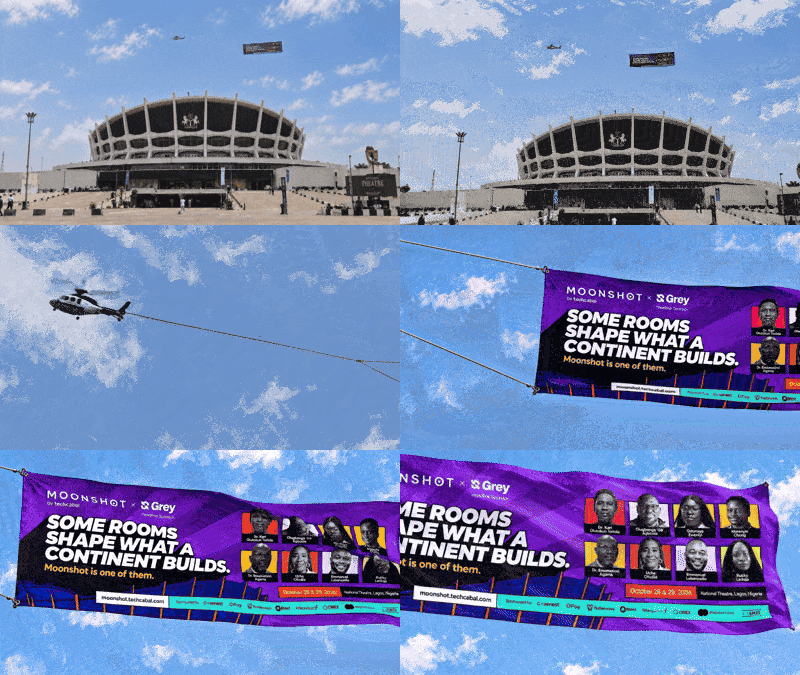
We are nine days away from Moonshot 2026. Importantly, we’re running a limited FLASH SALE that you mustn’t miss!
Until October 24, all tickets are 30% off, so now’s the perfect time to stop saying, “I’ll get mine later.” On October 28–29, the founders, investors, operators, and builders shaping African tech will convene at the National Theatre in Lagos, Nigeria. Be there!
Read smart insights about Francophone Africa’s tech ecosystem—weekly.

Banking
South Africa wants all ATMs to become unbranded

South Africa is not trying to kill cash. It is trying to make using it cheaper.
The South African Reserve Bank (SARB) wants the country’s more than 30,000 automated teller machines (ATMs) to become a shared, unbranded network. Small withdrawals, deposits, and balance enquiries would be free below a set limit, regardless of which bank owns the machine.
What happened? A pilot starts in January 2027. By March, the central bank wants to create a national cash utility, then begin folding cash centres run by companies such as SBV and Fidelity into that system by mid-year. The first white-label ATMs are expected before the end of 2027.
Explain like I’m new here: Today, each bank runs its own ATM network, cash centres, and logistics. That means duplicated machines, vehicles, routes, and vaults, all moving physical money around. SARB wants to pool much of that infrastructure and make ATMs work more like a national utility.
The economics explain the urgency. South Africa has about R180.65 billion ($10.9 billion) in cash in circulation, according to the SARB. The broader annual economic cost of using cash—including fees, travel, time, and crime-related losses—is estimated at nearly R90 billion ($5.5 billion). Cash accounts for about 56% of consumer transactions in South Africa, according to a Reserve Bank-commissioned study using 2024 as its base year, even as digital payment alternatives expanded.
Between the lines: Fewer cash transactions do not automatically make ATMs cheaper to run. The machines, guards, cash vans, and vaults still cost money. When those costs are spread across fewer transactions, each withdrawal costs more. Rural and low-income areas are usually the first places where banks cut machines.
A shared network flips that model. Banks stop duplicating the same infrastructure, while the central bank can place ATMs where access is most needed.
What to watch: The difficult part will be getting banks to surrender some control over machines they currently brand, price, and use to keep customers in their banking networks. If the model works, South Africa will not have fewer ATMs. But it will have fewer reasons for every bank to have its own.


Happy customer service week.

Your success and ours are the same story. Happy Customer Service Week. This year’s theme is The Extra Mile, and it’s the only way we know how to do this. Visit: fincra.com.
Capital Market
Banque du Caire may raise IPO stake to 45%
Egypt may make one of its biggest upcoming listings even bigger.
Banque Misr is considering selling up to 45% of Banque du Caire, Egypt’s sixth-largest commercial bank by assets, in its upcoming initial public offering (IPO), up from the 30% announced on October 11. Investment banks working on the deal recommended the bigger sale after roadshows drew strong investor interest globally.
Here’s a simple back-of-napkin maths: At Banque du Caire’s reported valuation of EGP 80 billion–EGP 80.5 billion ($1.5 billion–$1.51 billion), according to local publication Asharq Business, a 45% stake would be worth between EGP 36 billion–EGP 36.2 billion ($670 million–$674 million), compared with EGP 24 billion–EGP 24.2 billion ($447 million–$451 million) for 30%.
Those figures assume the shares sell at the reported valuation. Bloomberg reported on Sunday that the bank was seeking up to EGP 24.25 billion ($454 million) from a 30% sale and could increase the stake to 45%, depending on demand. The larger offer would take Egypt past that target, becoming the country’s largest listing in years.
Catch up: This IPO has been a decade in the making. Egypt first announced plans to float 20% of Banque du Caire in March 2016. The bank’s shares were provisionally listed on the Egyptian Exchange in 2017, but the sale was delayed. Another attempt in 2020 was shelved after COVID-19 hit global markets.
Another important detail: Banque du Caire will not receive the money. The IPO entirely consists of existing shares owned by Banque Misr, its state-owned shareholder. Selling 45% puts about 6.86 billion shares into investors’ hands compared with 4.58 billion under the current plan. Trading is expected to begin in November.
Between the lines: Going bigger does more than raise extra cash for the state. It leaves more Banque du Caire shares available for investors to trade after the IPO, which could help make the stock more liquid. More importantly, increasing the sale because investors asked for more would signal that foreign appetite for Egypt’s privatisation programme is returning.
Zoom out: Egypt’s stock exchange already has a strong line-up for Q4. MNT-Halan, the country’s first fintech unicorn, would begin trading on October 20, after its floated shares were at least three times oversubscribed. The planned listing aims to raise $150 million, with wide retail investors’ participation expected. With Banque du Caire taking over the following month, there’s a lot of excitement in Egypt right now.
Ten years of telling African tech stories.
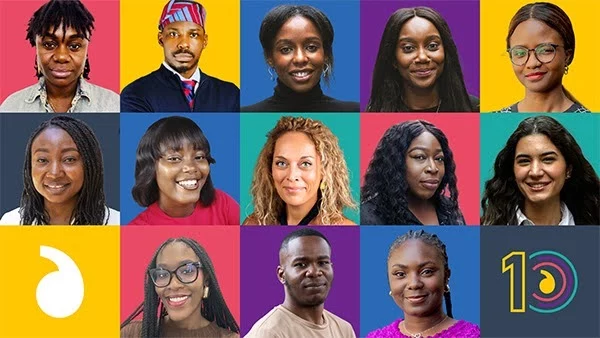
Class of 2016, stand up! Meet the storytellers behind a decade of storytelling for African tech. 230+ startups, VCs, and more. From first cheques to unicorns. Have a story to tell? Let’s make it count. #TheWimbarts
Telecoms
Vodacom keeps control of Safaricom amid ongoing court case

In June, Vodacom, one of Africa’s largest telecom companies, bought a majority stake in Safaricom, the operator of M-PESA. Four months later, a Kenyan court said it should undo the sale. Now, the shares remain in Vodacom’s custody as the legal battle over who gets to keep them moves to the next round.
What happened? On October 13, Kenya’s Court of Appeal ordered that the current position around the Safaricom shares and the $1.9 billion purchase price remain unchanged while it fast-tracks the appeal. That means Vodacom remains the registered holder of the 15% stake it bought from the Kenyan government.
Explain like I’m new here: Vodacom bought 15% of Safaricom from the Kenyan government, plus another effective 5% from Vodafone, its subsidiary, taking its stake from 35% to a majority of 55%. However, the deal ran into legal trouble.
Critics, including broadcaster Tony Gachoka and academic Frederick Ogola, challenged the sale, arguing that the government had not properly involved the public in the decision. The court froze it in March, then unfroze it in June. In September, the High Court declared the transaction unconstitutional and ordered the stake returned to the Kenyan government, throwing a spanner in the state’s plan to finance projects from those proceeds.
What’s the state of Safaricom’s ownership? Because Vodacom remains the registered holder of the shares, it can continue exercising the rights attached to its majority stake, including voting as a shareholder and participating in decisions that require shareholder approval. If the High Court judgment survives the appeal, Vodacom would lose the 15% stake it bought from the government and fall back to roughly 40%.
Don’t miss Moonshot 2026 for anything in the world!

True scale demands moving beyond surface-level integrations to robust execution. We’ve filtered the noise out of Moonshot 2026, optimising the conference strictly for high-calibre connections between startup founders, global financial operators, enterprise leaders and individuals rewiring Africa’s technical frameworks. Join us on October 28 & 29, 2026. Get your ticket.
Regulation
Ghana is changing how it collects VAT from foreign digital services
Ghana is looking to increase revenue, and taxing customers on the foreign digital services they use—such as Netflix, YouTube, and WhatsApp—is one strategy.
On October 15, the country launched Real-Time VAT (RTVAT) that lets the Ghana Revenue Authority (GRA), the country’s taxman, collect value-added tax (VAT) on qualifying digital services when customers pay foreign providers through Ghana-issued cards, mobile money accounts, and other digital payment channels.
The system applies to non-resident companies selling electronic services to customers in Ghana, including streaming platforms, cloud storage providers, software subscriptions, online advertising, and digital marketplaces.
Explain like I’m new here: This didn’t start today. Ghana has required foreign digital service providers to register for VAT since 2022. The GRA created an online registration and filing system for non-resident e-commerce businesses, requiring them to declare their Ghanaian sales and remit the taxes they collect.
However, Ghana cannot send a tax officer to a provider’s office monthly to check whether the right VAT was paid. Under RTVAT, when a Ghanaian customer pays for an eligible foreign digital service using a Ghana-issued card, mobile money account, or wallet, the payment provider can identify the transaction, withhold the applicable tax, and send it to the GRA.
Why is Ghana doing this? The GRA said that as of October 14, about 92 non-resident digital service providers were registered on the tax collection portal, while about 100 others either failed to collect the required taxes or haven’t remitted them. The authority previously estimated that an automated collection system could raise more than GH¢2.5 billion ($213 million) annually, compared with roughly GH¢515 million ($44 million) a year it currently collects.
What changes for users? If your Netflix bill already includes Ghanaian taxes, the GRA said RTVAT should not make you pay them twice. However, if a foreign provider previously didn’t collect the required tax, your final bill could now rise by 20%.
Zoom out: Banks, mobile money operators, payment service providers and other licenced payment processors handling these transactions must integrate with the RTVAT system. They must now correctly identify taxable transactions, collect and remit the right amount, and reverse the tax when refunds or chargebacks happen.
CRYPTO TRACKER
The World Wide Web3
Source:

|
Coin Name |
Current Value |
Day |
Month |
|---|---|---|---|
 Bitcoin |
$82,086 |
+ 1.94% |
+ 8.23% |
| Ether |
$2,445 |
+ 4.12% |
+ 1.79% |
| XRP |
$1.33 |
+ 3.17% |
+ 3.33% |
| Solana |
$105.83 |
+ 4.13% |
+ 9.07% |
* Data as of 06.54 AM WAT, October 16, 2026.
Opportunities
- Applications open for Her Startup’s second cohort: Her Startup is accepting applications from women-led tech startups across Africa for its 2026/2027 accelerator programme. Ten selected founders will receive 12 weeks of training, monthly stipends, mentorship, and an opportunity to access funding. Applicants must be women aged 18–35 running tech-enabled businesses that have operated for at least six months and generate at least $500 in monthly revenue. Applications close October 26. Apply here.

Written by: Emmanuel Nwosu and Yemi Kareem
Edited by: Emmanuel Nwosu & Ganiu Oloruntade
Want more of TechCabal?
Sign up for our insightful newsletters on the business and economy of tech in Africa.
- The Next Wave: futuristic analysis of the business of tech in Africa.
- Francophone Weekly by TechCabal: insider insights and analysis of Francophone’s tech ecosystem
P:S If you’re often missing TC Daily in your inbox, check your Promotions folder and move any edition of TC Daily from “Promotions” to your “Main” or “Primary” folder and TC Daily will always come to you.
Comments
Post a Comment