
It’s Day 2 at Moonshot 2026! 
Coming to Moonshot today? Come talk to us about the work we do at TechCabal, from journalism and newsletters to research, events, and everything in between.
Read smart insights about Francophone Africa’s tech ecosystem—weekly.

Fintech
Grey’s new move: salary accounts
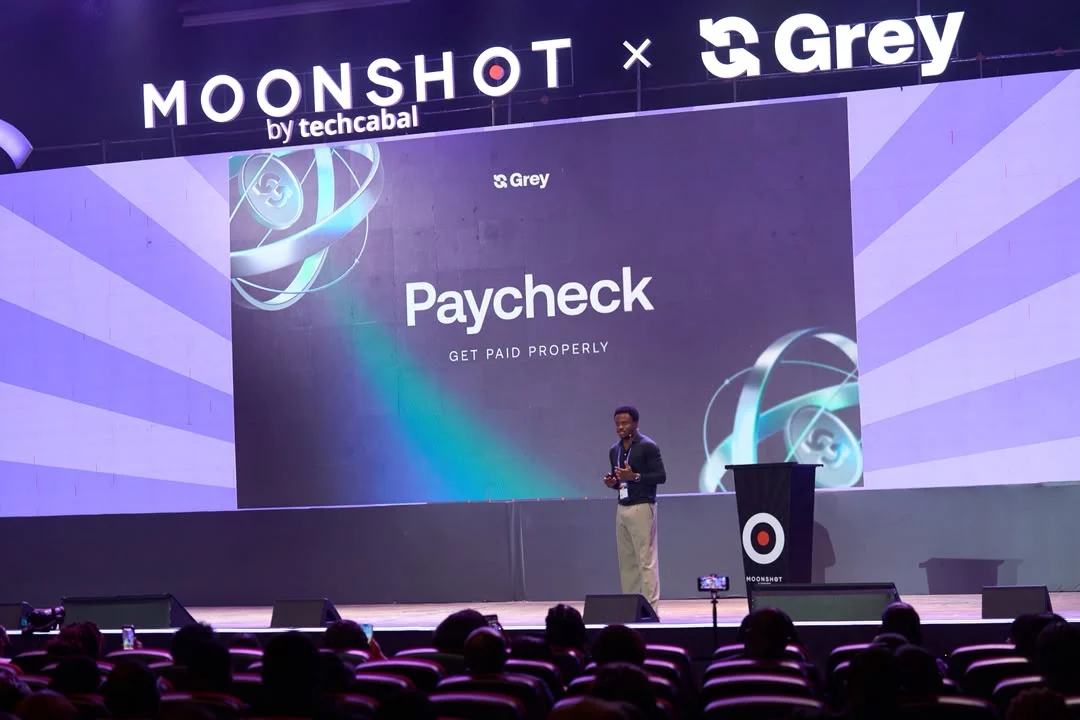
Grey has spent six years helping Africans get paid from abroad. Now it wants to become the place where payday begins.
What happened? Yesterday at Moonshot by TechCabal, Grey, the Y Combinator-backed cross-border payments company, launched Paycheck, a salary product for professionals earning in dollars, pounds and euros. Users can receive and organise salary payments, while qualifying customers get higher savings rates, larger transaction limits and priority support.
The launch comes as Grey crosses three million users and nearly $5 billion in processed payments. Its payment volume has also grown 170% year on year.
Explain like I’m new here: Grey did not start out trying to manage salaries. Idorenyin Obong and Femi Aghedo launched the company in 2020 as Aboki Africa, helping Nigerians exchange foreign currency in domiciliary accounts. The founders soon realised receiving the money was itself a bigger problem. In 2021, they pivoted to virtual dollar, pound, and euro accounts for remote workers and freelancers. Grey joined Y Combinator in 2022 and raised a $2 million seed round later that year.
It had about 100,000 users in 2022 and crossed one million in 2024. Today, it operates across dozens of markets and is also pushing into business payments.
Between the lines: Receiving foreign payments is no longer enough of a moat. Grey competes with Raenest, Cleva, Afriex, and others offering versions of the same multi-currency account.
Paycheck changes the relationship. If a salary lands in Grey every month, the company gets the first chance to handle what happens next: saving, converting currencies, sending money, or paying bills. The customer also has one less reason to move that income immediately to another financial app.
Zoom out: Grey Business, launched in February, has already processed nearly $100 million. Now Paycheck is attacking the consumer side of the same problem.
Grey built its first growth phase around helping people receive money; Obong said it is targeting between 10 million and 20 million users. Getting to that milestone may depend on giving them reasons to leave the money there.


Upgrade your business today
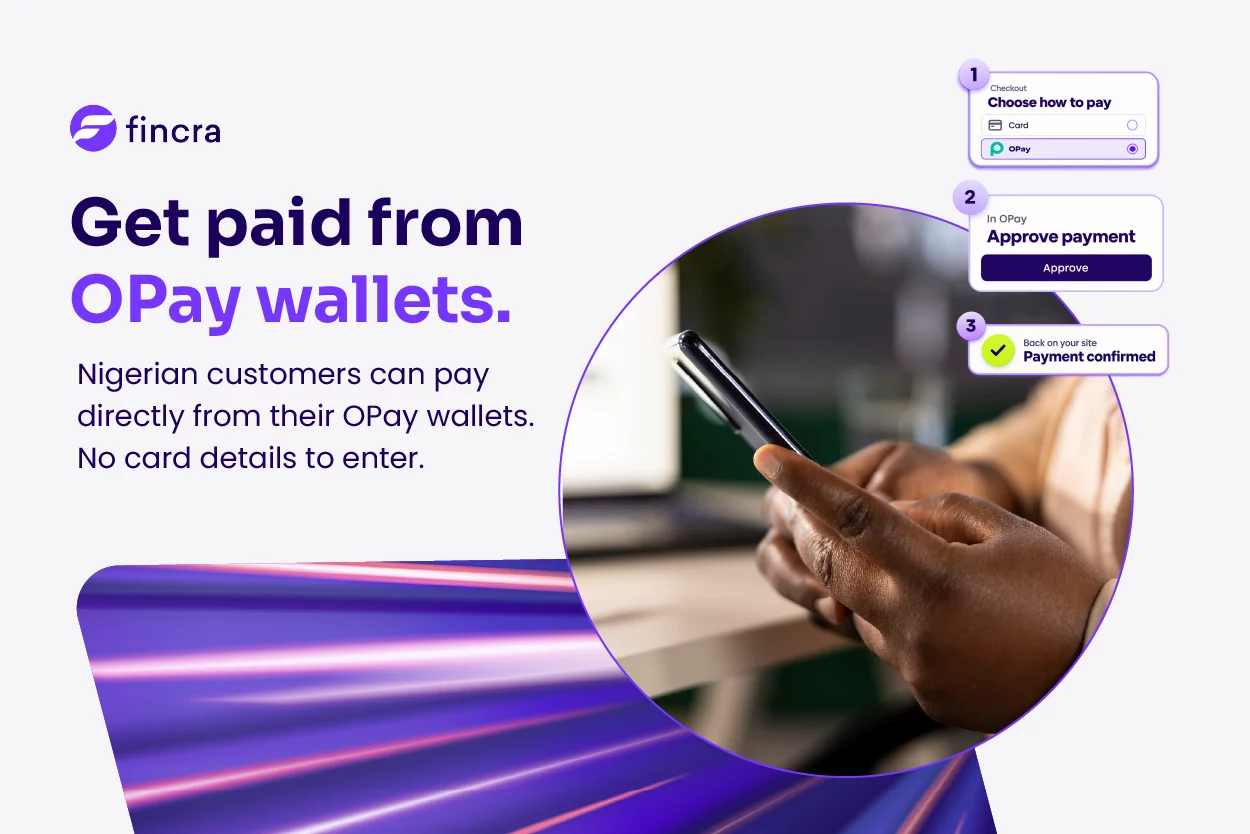
Pay with OPay is live on Fincra. Customers approve payments straight from their OPay wallet, and you get confirmation back on your site. Available now for NGN collections! Upgrade your business today with Fincra pay with OPay.
Fintech
Mastercard and Interswitch bring Google Pay to Nigeria

If you’re in Nigeria and used to making transfers or paying with your credit card, you’ll start seeing less of that.
What happened? Mastercard, the global payments giant, and Interswitch, a Nigerian payments infrastructure provider, have partnered to bring Google Pay to eligible Mastercard cardholders in Nigeria. The service lets customers add supported bank cards to Google Wallet and use an Android phone to make contactless payments at compatible point-of-sale (PoS) terminals.
Explain like I’m new here: Nigeria has been trying to get people to make contactless payments for a while. In 2015, Unified Payments launched PayAttitude, which used NFC tags to enable contactless payments. Access Bank has experimented with tap-to-phone payments, while Touch and Pay Technologies’ Cowry card has made contactless payments a familiar part of Lagos public transport. CashAfrica also recently partnered with Chicken Republic to introduce mobile tap-to-pay across more than 350 outlets.
Mastercard’spartnership lets users add an existing bank card to Google Wallet and turn the phone already in their hand into a tap-to-pay device.
How it works: Your bank still holds the money, and Mastercard still sits behind the payment. Google Wallet stores a digital version of the card, while Mastercard’s tokenisation technology replaces the card number with a unique digital credential when you pay. When you tap, the merchant does not receive your physical card details as it would from a traditional card transaction. The rollout includes eligible Mastercard cards issued by banks including FirstBank, GTBank, UBA and Zenith Bank.
Why this matters: Nigeria Inter-Bank Settlement System (NIBSS) recorded ₦284.9 trillion ($212 billion) in instant-payment transactions in Q1 2025, while the country had 5.9 million deployed PoS terminals by March. PoS transaction values reached ₦10.51 trillion ($7.8 billion) in the same quarter. However, Nigerians are already comfortable with transfers, so tap-to-pay needs to offer something better than being another way to do the same thing. The harder part is getting enough merchants to accept contactless payments and enough Nigerians to change their payment behaviour.
More value with Mycoverai
You already have a great product. With MyCover.ai, create tailored insurance for your customers across fintech, e-commerce, logistics and more, built around your product, and their needs. Get started here.
Moonshot
Moonshot Day 1 recap from Phathisani’s POV
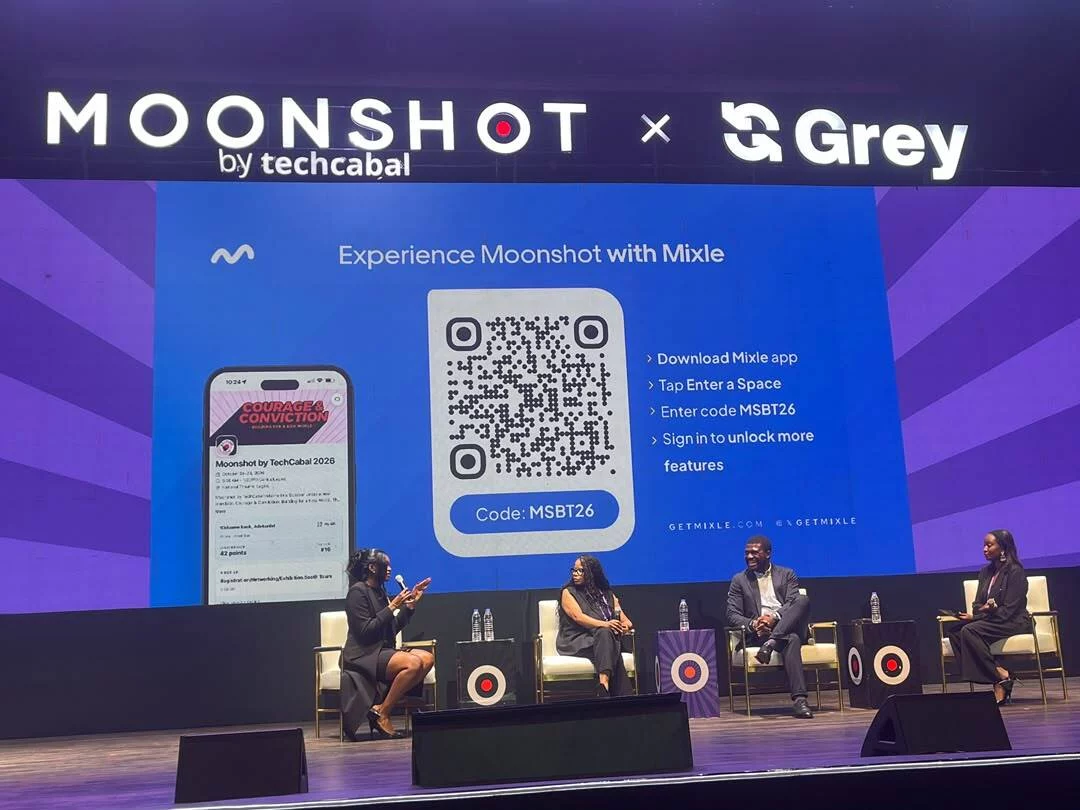
Day 1 of Moonshot by TechCabal, on my first-ever trip to Lagos, has exceeded my wildest expectations. I have attended my fair share of tech events, but the sheer number of African digital enthusiasts under one roof was something else.
Young aspiring innovators and software engineers mingled freely with some of the continent’s brightest minds, swapping ideas, making connections and soaking up eye-opening conversations.
My standout moment? A 10-minute walk behind Flutterwave founder and CEO Olugbenga Agboola as Opeyemi Kareem, the youngest member of the TechCabal newsroom, interviewed him on the move. As they moved through the buzzing venue, the conversation continued against a sea of young innovators, founders, and tech enthusiasts.
I found myself walking behind one of Africa’s most recognisable fintech leaders, watching the interview unfold in real time. It was an unexpectedly vivid snapshot of what makes Moonshot special: seeing the people building Africa’s biggest tech companies up close, while sharing the space with the next generation hoping to follow in their footsteps.
That, to me, is Moonshot’s magic. Inspiration isn’t confined to the stage; it happens in the corridors, during chance encounters, and in conversations between sessions.
And if Day 1 is anything to go by, Lagos has plenty more in store. Today, I’m looking forward to more candid conversations about cybersecurity, the next wave of startups, and Africa’s fast-evolving fintech landscape. If Day 1 is anything to go by, Day 2 will bring the curtain down with a bang.
Don’t miss Moonshot 2026 for anything in the world!

True scale demands moving beyond surface-level integrations to robust execution. We’ve filtered the noise out of Moonshot 2026, optimising the conference strictly for high-calibre connections between startup founders, global financial operators, enterprise leaders and individuals rewiring Africa’s technical frameworks. Join us on October 28 & 29, 2026. Get your ticket.
Moonshot
Moonshot Day 1 recap from Emmanuel’s POV
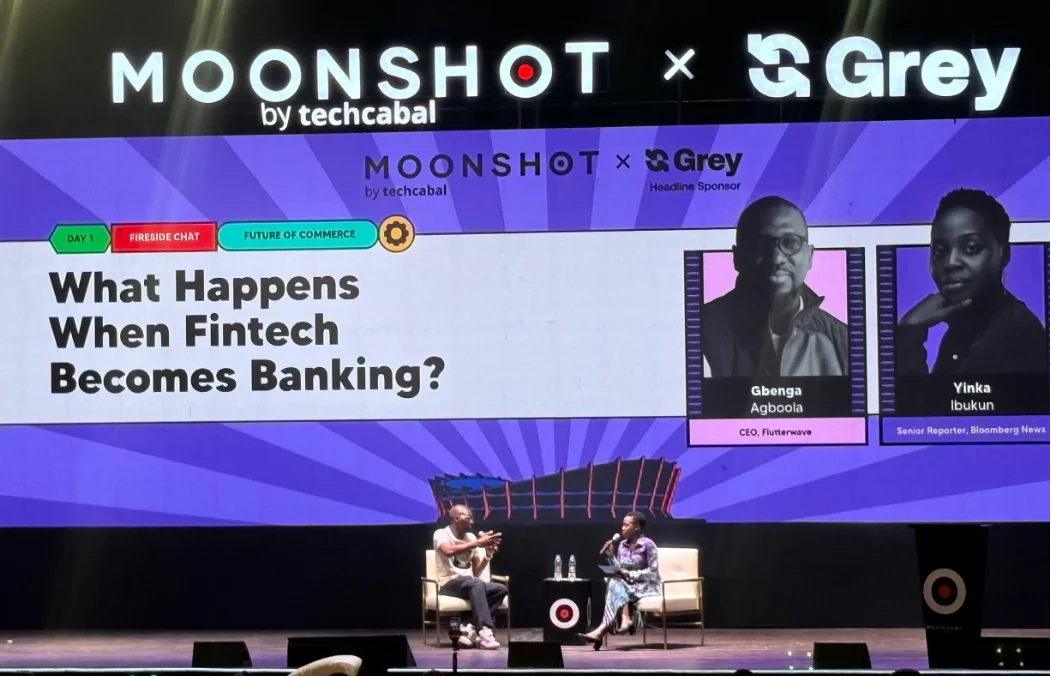
Between my hyperactivity and busyness at Moonshot Day 1, I somehow managed to sit still long enough to catch a few conversations that stuck with me.
Dr Emomotimi Agama, director-general of Nigeria’s Securities and Exchange Commission (SEC), was particularly animated about the growth of Nigeria’s capital market. He described the recent Dangote Refinery initial public offering (IPO), which closed on October 27, as a monumental success, noting that investors from 54 countries participated. He added that the offer was bigger than Indian billionaire Mukesh Ambani’s Jio Platforms IPO.
Then there was Flutterwave founder and chief executive officer Olugbenga “GB” Agboola, whose conversation kept returning to trust. Flutterwave spent its first decade convincing businesses to trust it to move their money. As the company moves deeper into banking, that trust becomes even more important because customers are no longer only asking Flutterwave to process payments; they are being asked to keep money there, too.
Adeyemi “Yemi” Adegbayi of Catalyst Fund, an early-stage venture capital firm, also ran one of the more practical sessions I caught, a masterclass on using AI to build better pitch decks. I liked that it did not treat AI as a magic button. The emphasis was on knowing what you want to say, prompting skilfully, and using the tool to sharpen the story rather than outsourcing the thinking.
The people were just as memorable as the sessions. Whenever I could steal a few minutes, I said hello to a familiar face, caught up with someone I had not seen in a while, met someone whose work I had only known through a screen, or simply dished out a few hugs.
Day 1 was busy, loud and slightly chaotic, but in a good way. Day 2 has an even more fantastic lineup, and I’m looking forward to plenty more conversations. I’m especially excited for my own session on intra-African payments and why moving money across the continent remains so hard. Catch me on the Future of Money stage today.
CRYPTO TRACKER
The World Wide Web3
Source:

|
Coin Name |
Current Value |
Day |
Month |
|---|---|---|---|
 Bitcoin |
$79,869 |
– 0.30% |
– 5.46% |
| Ether |
$2,390 |
– 2.19% |
– 14.03% |
| XRP |
$1.31 |
– 2.20% |
– 19.85% |
| Solana |
$103.84 |
– 1.51% |
– 13.17% |
* Data as of 06.49 AM WAT, October 29, 2026.
Opportunities
- Dar Blockchain and The Hashgraph Association have launched a four-month incubation programme to help 18 Web3 ventures from the Hedera Africa Hackathon become investment-ready startups. Backed by $900,000, the programme will provide technical support, business mentorship, product development assistance, and access to potential investors. At least five startups are expected to be ready for seed investment by January 2027, when the programme concludes with an investor Demo Day. Learn more.

Written by: Emmanuel Nwosu, Phathisani Moyo, and Yemi Kareem
Edited by: Emmanuel Nwosu & Ganiu Oloruntade
Want more of TechCabal?
Sign up for our insightful newsletters on the business and economy of tech in Africa.
- The Next Wave: futuristic analysis of the business of tech in Africa.
- Francophone Weekly by TechCabal: insider insights and analysis of Francophone’s tech ecosystem
P:S If you’re often missing TC Daily in your inbox, check your Promotions folder and move any edition of TC Daily from “Promotions” to your “Main” or “Primary” folder and TC Daily will always come to you.

Comments
Post a Comment